Building a Scalable Learning and Development Strategy

A scalable learning and development strategy helps your team learn the right skills at the right time. It keeps training consistent as you grow, supports employee growth, and connects learning to business goals. If your training feels random, hard to update, or too slow to roll out, this guide will help you build a system that can scale.
If you want to see what modern learning design looks like in action, explore our Learning Experience Design (LXD) services.
Key Takeaways
Start with business goals and job tasks.
Build training in small, reusable modules.
Measure performance, not just completions.
Add reinforcement so skills stick.
What a Learning and Development Strategy Really Means

A learning and development strategy is your plan for how people build skills and improve performance across your organization. It answers five key questions:
What skills matter most right now?
Who needs them, and when?
How will people learn them?
How will you support practice on the job?
How will you prove the training worked?
A strong strategy avoids “course clutter.” Instead of building training because someone asked for it, you build training because it improves results.
Why Scalability Matters in Learning and Development
Many companies can train one team well. The problem shows up when you need to train five teams, in three time zones, with different managers, and a steady flow of new hires.
When L&D is not scalable, you often see:
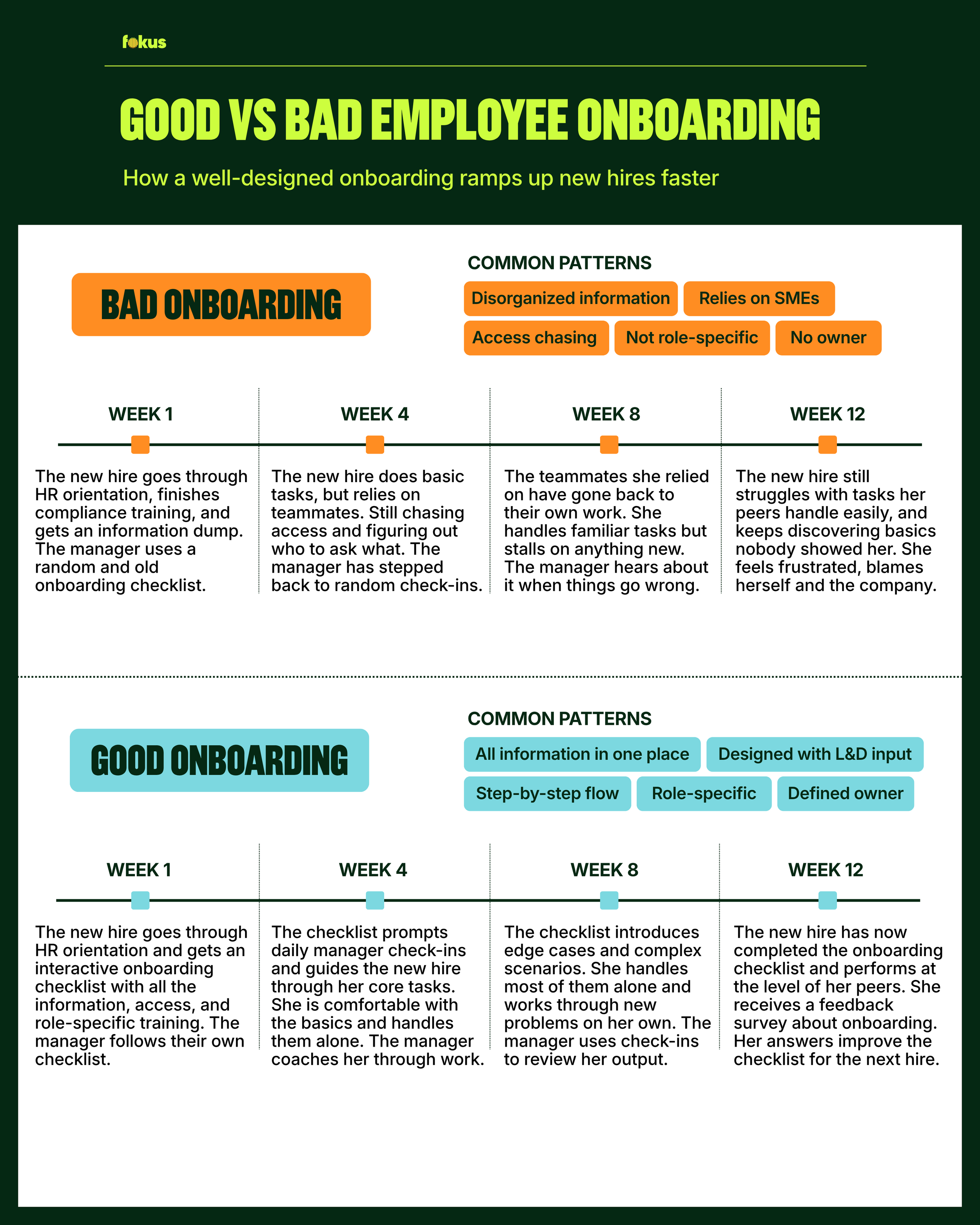
Longer ramp time for new hires.
Mixed quality across teams.
Too many updates and rework.
Training that is hard to find or follow.
Leaders asking, “What did people actually learn?”
Fokus has built learning programs for audiences ranging from six-person teams to 270,000 employees, so we design with scale in mind from day one.
Step 1: Align Your Learning and Development Strategy With Business Goals

Start by naming the business goal in plain terms. Examples:
Reduce customer escalations
Improve quality scores
Increase sales conversions
Reduce compliance mistakes
Speed up time to proficiency
Then connect the goal to the behaviors people must do on the job. This step matters because training should solve a real problem, not just share information.
A simple method that works:
Write the goal
List the roles that impact it
List the job tasks that drive the goal
Identify the skills needed for those tasks
Choose metrics you can track
If you need help turning business goals into learning plans, our instructional design services can support that work.
Step 2: Choose High Impact Priorities First
Trying to train everyone on everything is a fast way to fail. A scalable strategy starts with focus.
Look for areas that are:
High volume (many employees doing the work).
High risk (mistakes are costly).
High visibility (leaders care about results).
High change (tools, products, or policies shift often).
Many teams begin with customer facing roles like support or service because the business impact is clear. Fokus often supports high volume support teams, call centers, and sales and service groups where speed and consistency matter.
Step 3: Build Role Based Learning Paths

Your strategy should include learning paths that match real roles. A learning path is a set of training steps that build skill over time.
A scalable learning path often includes:
Start here onboarding basics.
Role training for key workflows.
Soft skills for communication and problem solving.
Tool practice for systems and processes.
Advanced skills for growth and promotion.
This is where structured instructional design for corporate training helps, because it keeps learning consistent across teams while still supporting real job needs.
Step 4: Design Training That Works in Real Work
Scalable training must be clear, practical, and easy to apply. That means less telling and more doing.
Practice that feels real
Scenario based activities and decision practice help people build confidence. Fokus uses proven adult learning principles with structured practice and built in feedback to drive behavior change.
Respect for people’s time
Short lessons, clear steps, and role specific content keep learners engaged. No filler content.
Soft skills plus system skills
In many roles, success depends on both communication and tool use under pressure. Training should teach both together.
Step 5: Build Training Content in Reusable Modules
Instead of one long course, build training as reusable blocks:

Core rules and standards.
Common workflows.
Product or policy modules.
Conversation and tone modules.
Job aids and checklists
When something changes, you update one module, not the whole program.
Modular design is also the foundation of strong custom eLearning design, because it makes updates faster and keeps learning consistent across roles.
Step 6: Use Blended Learning So Skills Stick
Scalable learning is not only self-paced eLearning. A strong learning and development strategy blends formats based on what people need to do.
A simple mix that scales well:
Self-paced lessons for basics and consistency
Live sessions for practice, coaching, and discussion
Manager support for check ins and feedback
Job aids for help in the moment
Fokus Group designs facilitator guides, slide decks, and interactive activities that drive participation and skill practice, not passive listening.
Step 7: Plan Reinforcement From the Start
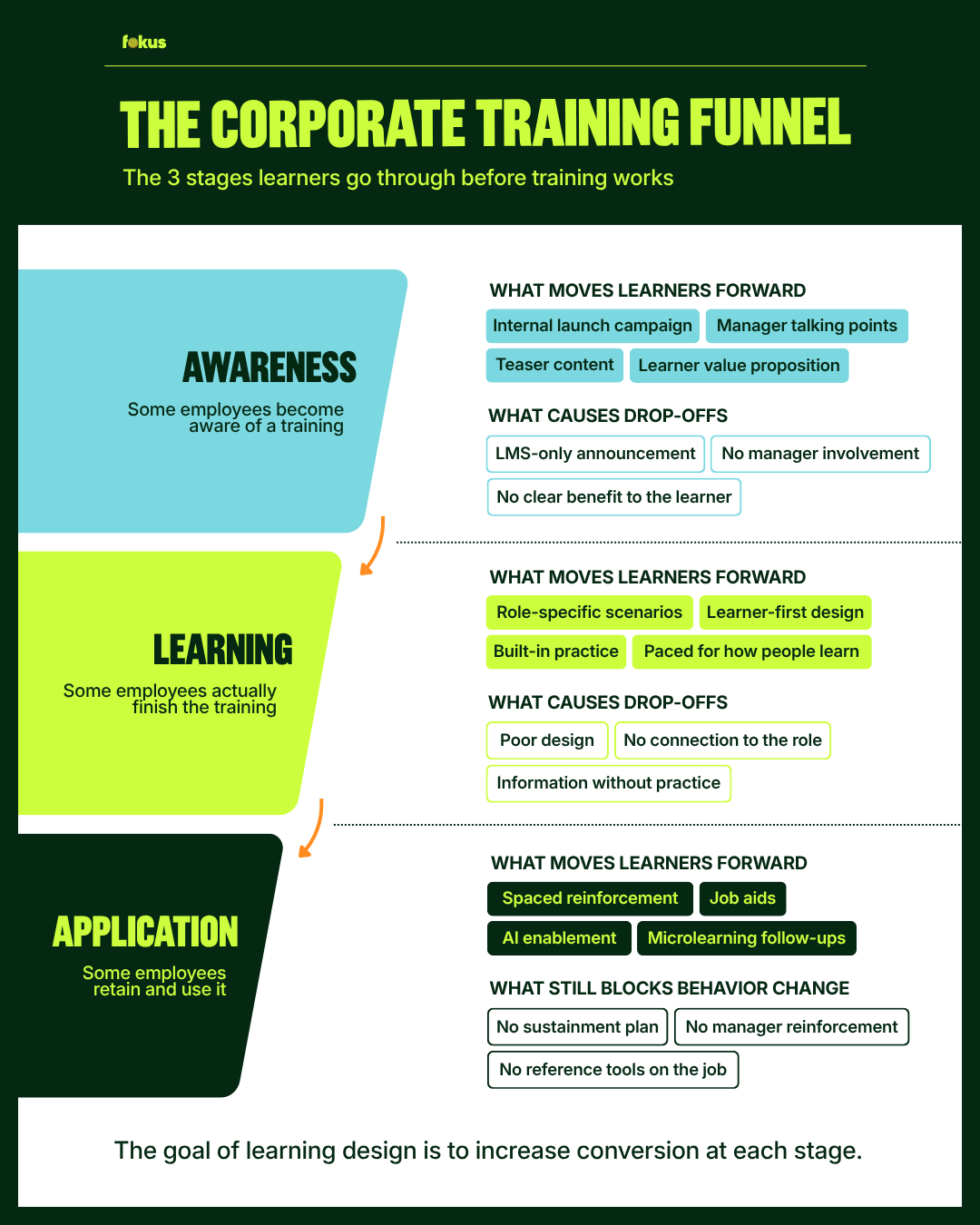
Reinforcement is what turns training into performance. Without it, people forget.
Build reinforcement into your strategy:
Manager prompts for coaching talks
Short refreshers after 2 to 4 weeks
Quick practice challenges
Peer sharing in team meetings
Simple scorecards for feedback
Fokus Group treats sustainment as part of the solution and builds manager friendly supports that keep learning active on the job.
Step 8: Measure What Leaders Care About
To keep support for L&D, measure outcomes, not just attendance.
Use three metric types:
Learning metrics
Completion rate
Knowledge checks
Confidence ratings
Performance metrics
Time to proficiency
Quality scores
Error rate
Escalations
First contact resolution
Business metrics
Customer satisfaction
Revenue impact
Retention and turnover
Pick a small set for each program. Keep tracking simple and useful.
Step 9: Add Light Governance So Training Stays Clean
When training scales, version control becomes a problem. Governance keeps your strategy stable.
Add:
Clear owners for each learning path
A simple review cycle
Templates for content and design
A feedback loop with managers and learners
This keeps learning consistent and easier to update over time.
How FOKUS Helps You Scale Learning
If you want a scalable learning and development strategy but do not want to build everything alone, Fokus can support you. We design modern, science backed learning experiences that speed onboarding, strengthen soft skills, and support regulated teams with custom training solutions.
A common starting point is a strategy sprint where we:
Clarify business goals and success metrics.
Define role based learning paths.
Map content into modular learning blocks.
Recommend the best delivery mix.
Create a build plan that fits your timeline.
If improving ramp time is a key goal, our employee onboarding training solutions can help you build consistent, role ready onboarding.
Frequently Asked Questions
What Is a Learning and Development Strategy?
It is a plan for how your company builds skills and improves performance. It outlines what people learn, how they learn it, and how you measure success.
What Makes a Learning and Development Strategy Scalable?
It is scalable when it is modular, role based, easy to update, and supported by reinforcement. It also uses learning formats that work across teams and locations.
How Do I Align L&D With Business Goals?
Start with the business goal, then define the job behaviors that drive it. Build training around those behaviors and measure results using performance metrics.
What Should We Measure To Prove Training Works?
Track time to proficiency, quality scores, error rates, customer outcomes, and retention. Completions alone do not prove impact.
How Can FOKUS Support Our Learning and Development Strategy?
Fokus can help you plan learning paths, design training systems, and build eLearning and instructor led training that fits your teams and goals, with reinforcement tools that help learning stick.
Final Thoughts
A scalable learning and development strategy is not about more training. It is about the right training, built as a system, tied to business goals, and supported over time. When you design for real work and long term reinforcement, learning becomes a driver of growth and a stronger performance culture.

Fokus
Fokus is a learning and development consultancy that helps organizations design modern, impactful learning experiences. We combine strategy, instructional design, and technology to create solutions that improve performance, build capability, and drive measurable business results.