12 Types of Corporate Training Programs and When to Use Them

The right types of corporate training programs help employees perform faster, reduce risk, and create more consistent customer experiences. The key is not choosing what is popular, but choosing what fits your business trigger and the behaviors you need on the job.
Key Takeaways
Match training to the business trigger.
Build for performance, not information.
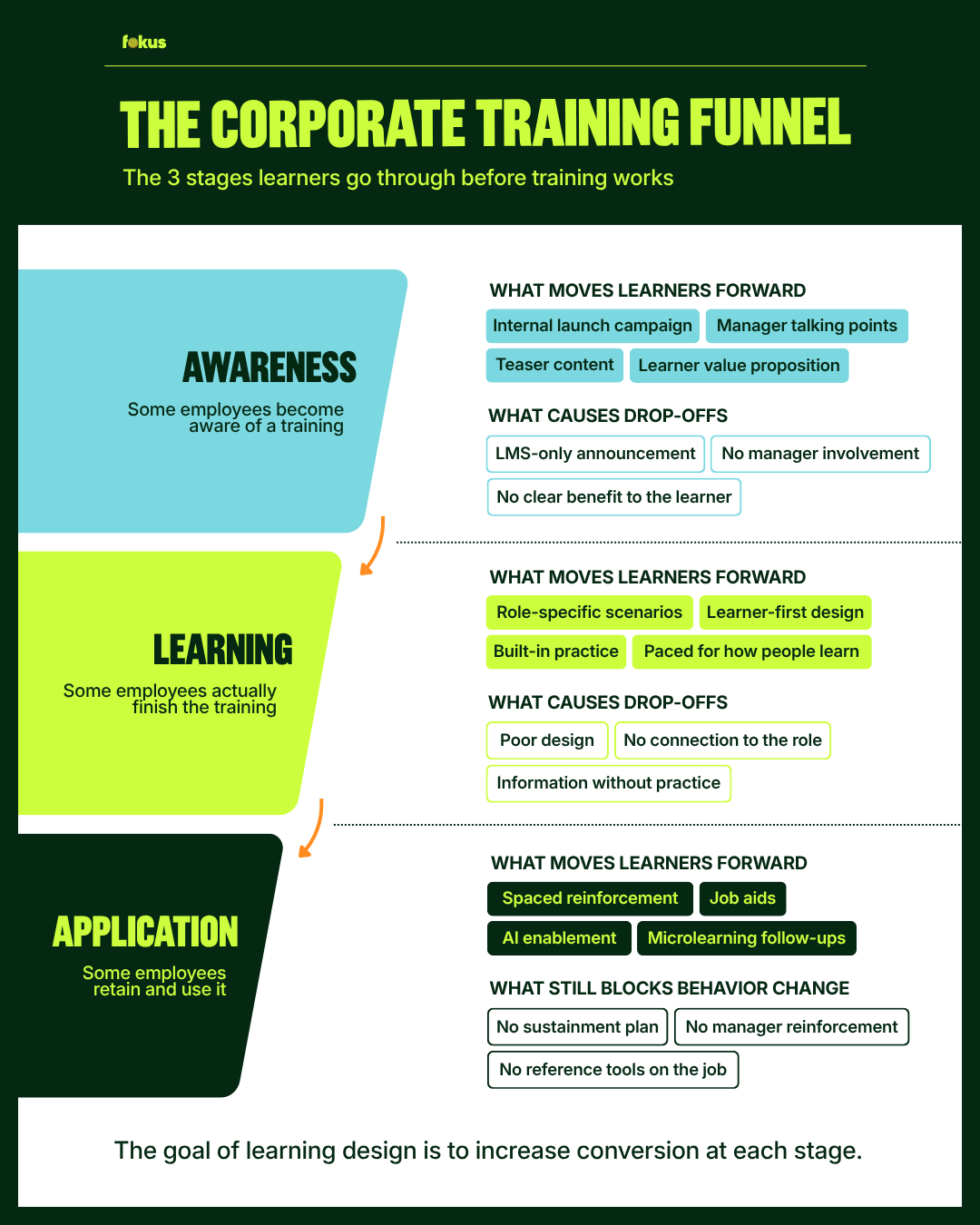
Reinforce learning after launch.
Measure behavior and results.
Types of Corporate Training Programs: How to Choose the Right One

Before you decide which program to build, get clear on the problem you are solving.
Are you hiring rapidly and seeing long ramp times?
Are policies changing and audit pressure rising?
Are customer issues increasing because teams are inconsistent?
Different problems require different training structures, practice formats, and reinforcement plans.
When you align the training type with a specific moment, such as a system rollout or a leadership transition, you avoid one-size-fits-all learning and deliver training that drives performance.
1) Employee Onboarding Training
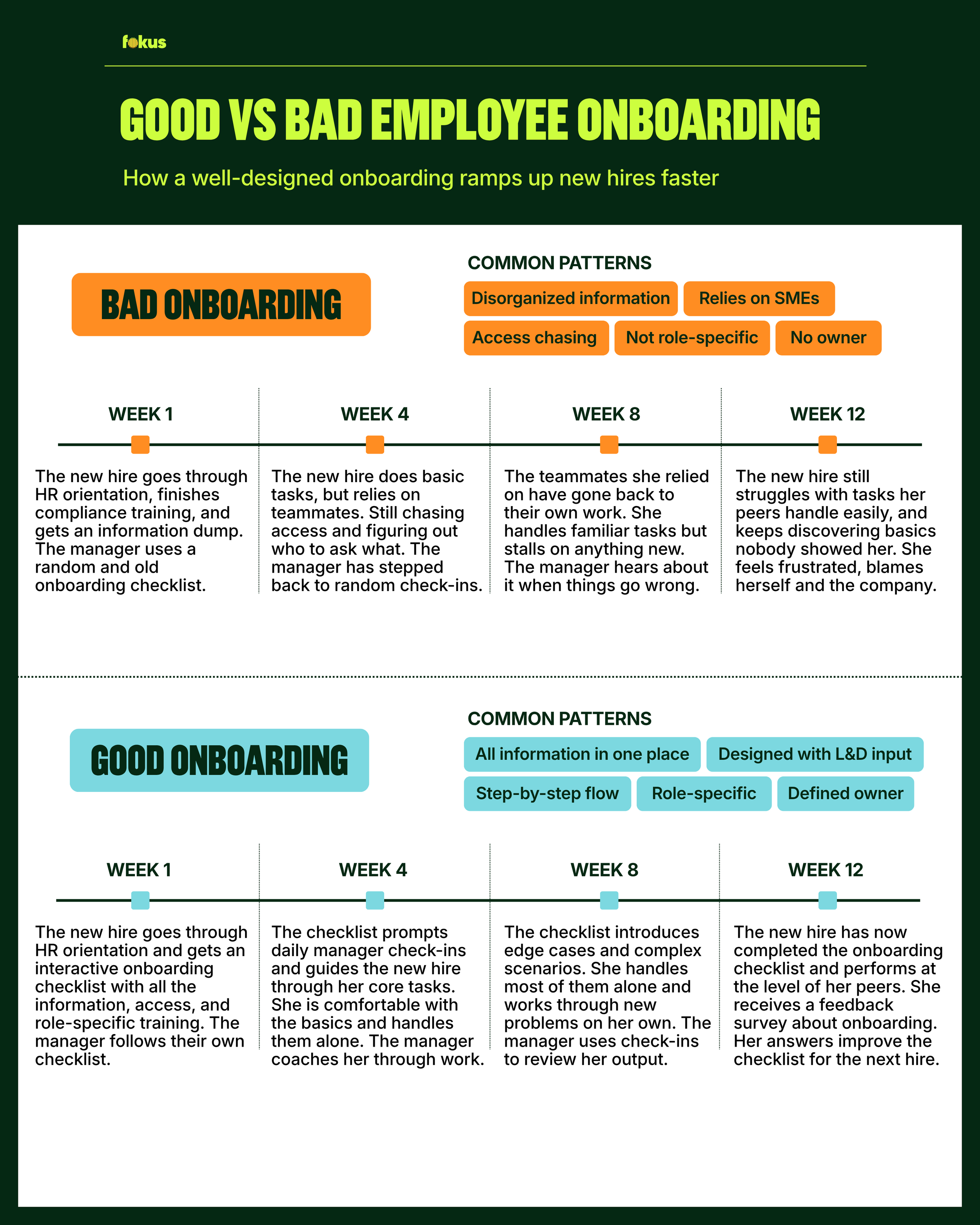
A structured learning journey that helps new hires understand expectations, culture, tools, and role responsibilities.
When to Use It?
Use onboarding training when hiring increases, early turnover rises, productivity ramps slowly, or managers spend too much time repeating the same basics. It is also essential for distributed teams where informal shadowing is limited. Build a role-based path, include realistic tasks and scenarios, and support the first 30 to 90 days with check-ins and job aids.
If you want to reduce time-to-proficiency and improve early retention, explore Fokus’ employee onboarding training solutions.
2) Compliance and Regulatory Training
Training that ensures employees understand legal requirements, internal policies, and regulated processes, with trackable completion and assessment.
When to Use It?
Use compliance training when regulations apply to your work, policies change, audit findings appear, or incidents show that employees are unsure what “right” looks like. Keep modules short, use plain language, include role-specific examples, and test decision-making, not memorization.
3) Workplace Safety Training
Training that reduces physical risk and promotes safe behaviors, including emergency procedures and hazard awareness.
When to Use It?
Use safety training for frontline environments, manufacturing, labs, field roles, healthcare settings, or whenever incident rates and near-misses trend upward. Pair learning with hands-on practice, refresh key behaviors often, and use supervisor checklists to reinforce correct habits.

4) Cybersecurity and Data Privacy Training
Training that reduces human risk related to phishing, credential hygiene, secure device use, and data handling.
When to Use It?
Use this training year-round, and strengthen it during new tool rollouts, remote work expansions, policy updates, or after any security incident. Use microlearning and simulations, teach recognition and response behaviors, and reinforce with short follow-ups and reminders.
5) Technical Skills and Systems Training
Training that helps employees use platforms and tools correctly, such as CRMs, ticketing systems, ERPs, analytics dashboards, and internal workflows.
When to Use It?
Use systems training during implementations, upgrades, process changes, and when teams rely on workarounds or make avoidable errors. Focus on real job tasks, provide guided practice, and include job aids that mirror how employees actually work.
6) Product and Process Training
Training that builds accurate knowledge of products, services, procedures, and internal policies.
When to Use It?
Use product and process training for launches, policy changes, pricing updates, and when customer-facing teams give inconsistent answers. Teach what changed, why it matters, and how employees should respond in common situations. Pair product knowledge with customer conversations.
7) Customer Service Training

Training that improves communication, empathy, de-escalation, and resolution quality across service channels.
When to Use It?
Use customer service training when CSAT drops, escalations rise, complaints increase, or new channels launch. It is also useful when service teams need more consistency across regions or shifts. Use scenarios and role practice, calibrate examples across the team, and equip supervisors with coaching tools for reinforcement.
8) Sales Enablement Training
Training that improves discovery, messaging, objection handling, negotiation, and the effective use of sales tools.
When to Use It?
Use sales enablement training when win rates dip, the sales cycle lengthens, a new product launches, or messaging changes across the market. Use talk tracks, call-based scenarios, and practice sessions with targeted feedback. Align learning with your sales process and metrics.
9) Communication and Collaboration Training
Training that strengthens communication, cross-functional alignment, and teamwork habits like meeting clarity, handoffs, and conflict management.
When to Use It?
Use collaboration training when delays come from misalignment, rework is common, or leaders report recurring friction between teams. Teach simple frameworks, practice on real work, and define shared norms that reinforce expectations.
10) Leadership Development Training
Training that prepares leaders to influence, coach, set direction, and build high-performing teams.
When to Use It?
Use leadership development when new leaders are promoted, teams expand quickly, or results vary due to inconsistent management practices. Combine learning with reflection, scenario practice, and application projects. Support leaders with coaching and peer learning.
11) People Manager Essentials Training
Practical training for core manager responsibilities, including feedback, performance conversations, goal-setting, and career development support.
When to Use It?
Use manager training when engagement declines, turnover rises, or managers lack confidence in difficult conversations. It is especially helpful during organizational change. Provide scripts, templates, and short modules that align with common manager moments, like one-on-ones and performance reviews.
12) Coaching, Mentoring, and Continuous Development Programs
Ongoing development programs that pair employees with mentors or coaches to accelerate growth, improve performance, and build career pathways.
When to Use It?
Use these programs when you want to retain talent, build internal mobility, support high-potential employees, or close skill gaps over time. Set clear goals, define consistent touchpoints, and measure outcomes tied to performance and progression.
How to Select the Best Training Type for Your Team
If you are prioritizing multiple needs, use these questions to narrow the right training mix:
What is the trigger? Hiring growth, new tools, risk exposure, performance gaps, or strategy shifts.
What must change on the job? Define observable behaviors, not vague goals.
Who is the audience? New hires, frontline managers, or specialists, and what time they realistically have.
What support is needed after training? Job aids, manager coaching, refresher modules, and performance support.
How will success be measured? Time-to-proficiency, quality scores, audit results, customer metrics, or reduced errors.
Many organizations succeed with a blended approach that combines self-paced learning, live practice, and reinforcement. That blend is often more effective than choosing a single format.
If you are building a company-wide learning strategy, Fokus’ instructional design for corporate training can help you align training with performance and business outcomes.
Why FOKUS Is a Trusted Partner for Corporate Training Programs
Fokus designs modern learning experiences that speed onboarding, strengthen soft skills, and support regulated teams with custom training, eLearning, and instructor-led programs. The focus is practical performance: what people need to do on the job, the practice they need to build confidence, and the reinforcement that keeps behaviors consistent over time.
Whether you need a complete training program or a refresh of an existing curriculum, a strong instructional design process helps you reduce noise, improve clarity, and make training measurable.
Frequently Asked Questions
What Are The Most Important Types Of Corporate Training Programs?
Most organizations prioritize onboarding, compliance, role-based technical training, and customer communication. The right mix depends on your risk exposure, how quickly roles must ramp, and where inconsistency is costing time or customers.
How Do I Know Which Training Program Type To Build First?
Start with the highest-impact gap. Look for costly errors, slow ramp time, audit findings, customer escalations, or missed revenue targets. Then define the behaviors that will change those outcomes and design training around them.
What Is The Difference Between Corporate Training Types And Delivery Methods?
Training types describe the goal and focus area, such as onboarding or leadership. Delivery methods describe how training is delivered, such as eLearning, instructor-led sessions, coaching, simulations, or blended learning.
How Often Should Corporate Training Be Updated?
Update training whenever policies, tools, products, or processes change. For high-risk topics like compliance and cybersecurity, add shorter refreshers throughout the year to keep behaviors current.
How Can FOKUS Help With Corporate Training Programs?
Fokus can design or improve corporate training programs with performance-based strategies, engaging learning experiences, and reinforcement tools. For scalable learning, Fokus also provides custom eLearning design that includes scenarios, practice, and assessments aligned to job tasks.
Final Thoughts
The best types of corporate training programs are the ones that match your business trigger and build real capability on the job. When training is practical, reinforced, and measurable, it becomes a system that helps your people perform with confidence and consistency.

FOKUS
Fokus is a learning and development consultancy that helps organizations design modern, impactful learning experiences. We combine strategy, instructional design, and technology to create solutions that improve performance, build capability, and drive measurable business results.