What Is Instructional Design in Training? A Simple Guide

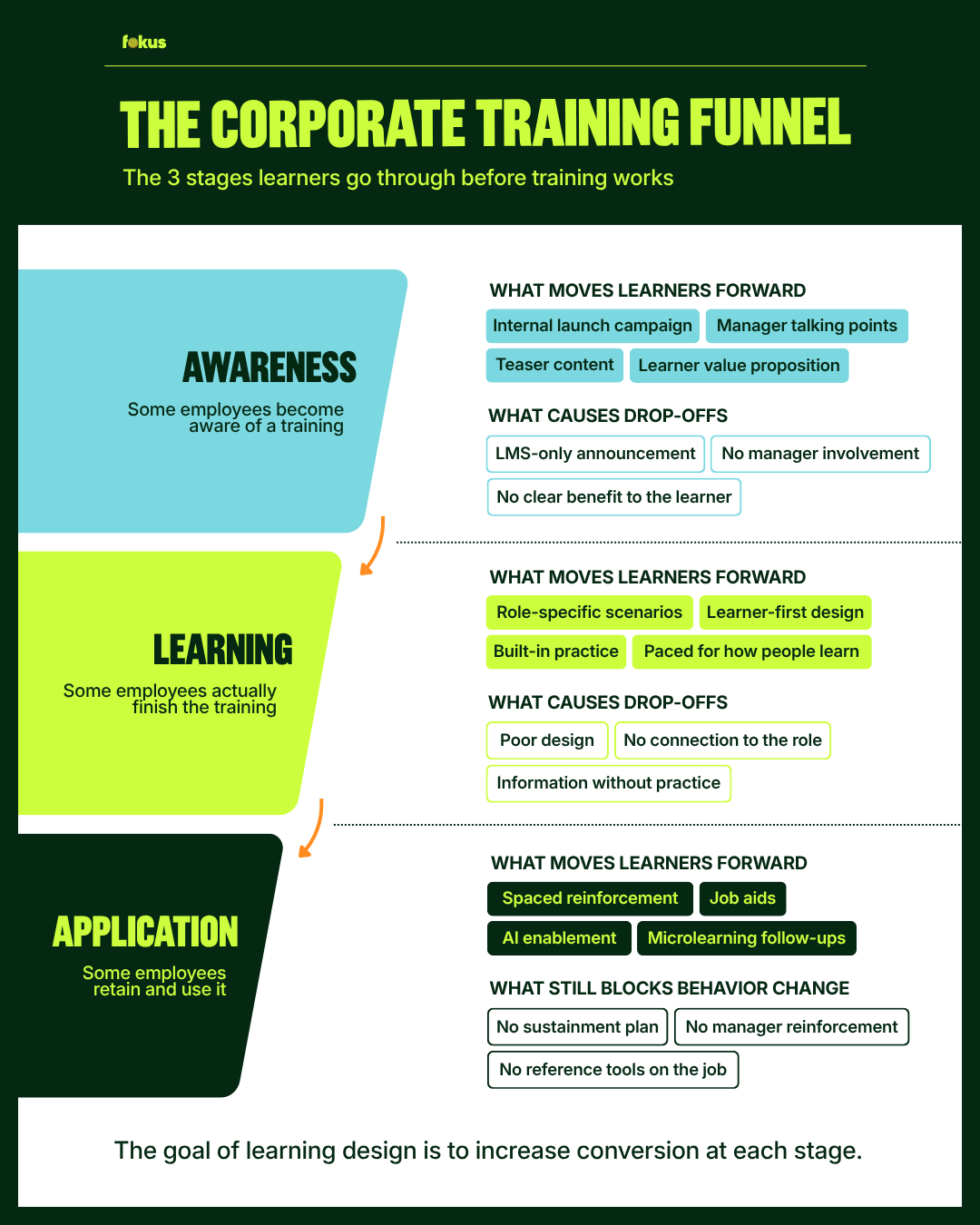
If you are searching for what instructional design in training is, you are likely trying to solve a practical challenge: creating learning that improves performance, not just participation.
Instructional design is the discipline that turns a business need into a clear learning experience employees can complete, apply, and sustain on the job.
Key Takeaways
Prioritize training needs using importance, proficiency, and frequency.
Build programs around practice, feedback, and reinforcement to support on-the-job transfer.
Align objectives and metrics so training is easier to measure and improve.
What Instructional Design in Training Means
Instructional design in training is a structured approach to planning, building, and improving learning so employees develop job-ready skills. In corporate settings, that often means designing around real tasks and decisions, such as handling customer conversations, following compliance steps, using tools correctly, or applying a consistent process.
Instead of starting with, “What content should we cover?” instructional design starts with questions like these:
What must employees do differently after training?
What does good performance look like in this role?
What is blocking performance right now: knowledge, practice, tools, or confidence?
What support will help employees apply learning after the course ends?
That shift is often the difference between training that feels informative and training that changes behavior.
Instructional Design vs Training Content
Most organizations already have content: slide decks, SOPs, videos, knowledge base articles, and templates. Content is useful, but content alone does not build capability.
Instructional design turns information into performance by adding what content often misses:
Clear objectives that define success in observable terms
Realistic practice that mirrors job tasks and decisions
Feedback loops that help learners correct mistakes and build confidence
Reinforcement supports such as job aids and manager coaching prompts
A simple way to say it is this: content tells; instructional design builds.
How Instructional Design Works in Corporate Training
Instructional design is a process that moves from a performance need to a learning solution you can launch, improve, and measure. Many teams use a framework like ADDIE, but the real value is not the acronym. The value is the discipline of designing for performance, not exposure.
Analyze the Performance Need
Start by defining what “better” looks like and why it is not happening today. Useful analysis includes:
Who is the audience, and what does their work environment look like?
What do top performers do that others do not?
What is the root cause: knowledge, skill, process, tools, or expectations?
What constraints exist: time, systems, access, language, or compliance needs?
Sometimes the best answer is not a course. It might be a job aid, a workflow change, a system prompt, or a coaching routine. Analysis helps you avoid building training that cannot solve the real problem.
Design for Objectives, Practice, and Transfer

Design is where training becomes performance-focused. Strong design typically includes:
Objectives tied to what learners must do on the job
Practice that requires decisions, not just recall
Feedback that explains what to do differently and why
Assessments that mirror real tasks
A reinforcement plan that continues after the training
This is also where you choose the right format: instructor-led training, self-paced eLearning, blended learning, on-the-job practice, or performance support tools.
Build, Launch, and Improve
During development and implementation, the strongest teams prototype early, test with representative learners, and revise. A smooth launch also includes adoption support such as learner communications, manager guidance, and quick ways to apply skills immediately after training.
Evaluation should match the goal. If you want behavior change, measure behavior. If you want a business outcome, connect training to that outcome through observation and performance data.
Principles That Improve Real-World Performance
No matter the format, these principles make workplace learning more effective:
Design around tasks and decisions. Organize learning around what people must do.
Use realistic practice. Scenarios, role-plays, and simulations reduce the gap between training and the job.
Provide specific feedback. Learners improve faster when feedback explains the better choice and the reason.
Keep learning lean. Teach what matters most, and provide job aids for what can be referenced later.
Plan for reinforcement. Follow-up practice and manager coaching help learning stick.
If you are building interactive digital learning, a scenario-driven approach is a strong fit for scalable programs like custom eLearning design.
Measuring Success Without Overcomplicating It

Training is easier to measure when it is designed for measurement. Align these four elements:
Business goal
Observable behaviors that drive the goal
Learning objectives that match those behaviors
Assessments and metrics that show progress
A practical measurement plan might include:
A baseline sample of performance (QA scores, error rates, or a short skills check)
A post-training demonstration that mirrors the baseline
Manager observation within 2 to 4 weeks using a simple checklist
A metrics review at 30 to 90 days, based on the role and outcome
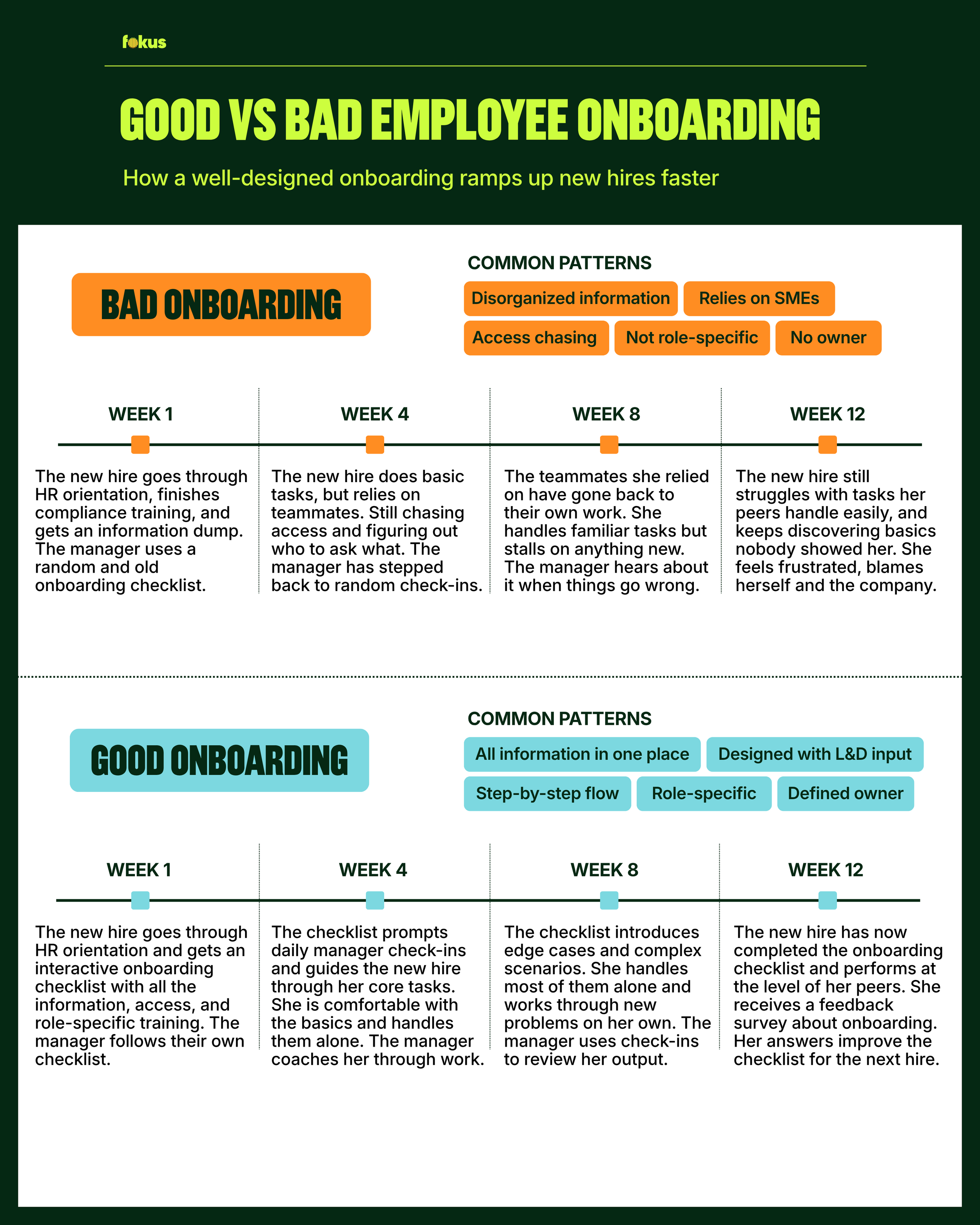
One common high-value use case is onboarding. If your biggest challenge is ramp time and early consistency, structured onboarding can make outcomes easier to observe and improve with employee onboarding training solutions.
How Fokus Helps With Instructional Design in Training
Once you collect performance needs, the next step is turning them into training that changes what people do. At Fokus, we design modern learning experiences that speed onboarding, strengthen soft skills, and support regulated teams with custom training, eLearning, and instructor-led programs.
We help teams translate business goals into role-based learning roadmaps, scenario practice, reinforcement strategies, and measurement plans. If you want a partner to analyze needs, design a learning strategy, and build training that scales, explore our instructional design services.
For repeatable programs across roles, locations, and teams, our approach to instructional design for corporate training supports performance-focused learning that aligns training to business goals.
Frequently Asked Questions
What Is Instructional Design in Training in Simple Terms?
It is the structured process of building training that helps employees do their jobs better. It turns business goals into clear objectives, realistic practice, feedback, and reinforcement that supports on-the-job application.
What Does an Instructional Designer Do in Corporate Training?
An instructional designer analyzes performance needs, defines measurable objectives, designs learning activities and assessments, builds training assets (such as eLearning and facilitator guides), and evaluates whether training improves performance.
What Are the Most Common Instructional Design Models?
Many teams use ADDIE (analysis, design, development, implementation, evaluation). Others use agile approaches that prioritize rapid prototyping and iteration. The best choice depends on timelines, stakeholders, and training complexity.
How Do You Know If Training Needs Instructional Design?
If learners complete training but performance does not improve, instructional design can help. It clarifies the real performance gap, identifies root causes, and adds practice and reinforcement so employees can apply skills under real conditions.
How Can Fokus Help With Instructional Design in Training?
Fokus helps organizations design training that is practical, engaging, and measurable, including onboarding, soft skills, and regulated training programs.
Final Words
Now that you understand what instructional design in training is, the core idea is straightforward: it is how you create learning that improves performance through clear objectives, realistic practice, and reinforcement that supports on-the-job application. When training is built this way, it becomes easier to apply, easier to scale, and easier to measure.

Fokus
Fokus is a learning and development consultancy that helps organizations design modern, impactful learning experiences. We combine strategy, instructional design, and technology to create solutions that improve performance, build capability, and drive measurable business results.