8 Effective Employee Training Methods for Modern Teams
Modern work moves fast. Tools change, customer expectations rise, and teams are often distributed across time zones. The right employee training methods help people ramp up faster, build confidence, and apply skills on the job without wasting time on bloated content.
The key is choosing methods that match your goals, audience, and workflows, then reinforcing learning long enough for it to stick.
Key Takeaways
Match employee training methods to your goal, audience, and workflow.
Combine practice and feedback for real skill transfer.
Use eLearning and microlearning to scale and reinforce learning.
Add coaching and structured on-the-job training to build habits.
Blended learning often best balances flexibility with live practice.
8 Proven Employee Training Methods to Improve Performance
Modern teams need training that is practical, flexible, and built for real work. The most effective employee training methods go beyond sharing information. They help people practice key tasks, receive timely feedback, and apply new skills throughout their day.
Below are eight proven approaches you can mix and match based on your goals, team size, and work environment, so training improves performance instead of becoming a checkbox.
1) On-the-Job Training (OJT) With Structured Practice

On-the-job training is one of the most effective employee training methods because it takes place in the real world, where performance matters. The risk is inconsistency across trainers, shifts, and locations. To make OJT reliable, standardize it with:
A step-by-step task checklist.
“Watch, try, do” practice cycles.
Quick manager observation rubrics.
A short knowledge check after key tasks.
This method is especially effective for operational roles, frontline teams, and tool-based workflows where speed and accuracy matter.
2) Instructor-Led Training (ILT) for High-Stakes Skills
When a topic is complex, sensitive, or requires real-time discussion, instructor-led training is still a strong option. Use ILT when you need:
Live scenario practice for difficult conversations.
Immediate coaching and feedback.
Team alignment on processes, standards, or judgment calls.
To keep ILT effective, prioritize interaction over lecture. Case work, role-play, breakout discussions, and practice rounds build capability faster than long presentations.
3) Virtual Instructor-Led Training (VILT) for Distributed Teams
VILT is a practical employee training method for remote or global teams that still need real-time facilitation. It works best when sessions are shorter, highly structured, and supported by digital resources. A strong VILT setup includes:
Brief pre-work (10-15 minutes).
Live practice with clear facilitation.
Post-session reinforcement, such as a job aid or short quiz.
This format also works well for scaling onboarding cohorts across locations.
4) Self-Paced eLearning for Consistency and Scale

Self-paced eLearning is ideal when you need consistent messaging across many learners. It supports onboarding, product knowledge, compliance, and systems training, especially when teams are distributed. High-impact eLearning typically includes:
Realistic branching scenarios.
Interactive decision points.
Short assessments that mirror job tasks.
Accessible, mobile-friendly design.
If you are building or upgrading digital training, consider a custom eLearning design that aligns content with real workflows and performance goals.
5) Microlearning for Reinforcement and Performance Support
Microlearning breaks content into small, focused lessons that fit into the flow of work. It is best used for reinforcement, refreshers, and quick guidance at the moment of need. Examples include:
Three-minute how-to videos.
Single-skill scenario practice.
Quick quizzes for key policy points.
Searchable job aids and checklists.
Microlearning is most effective when each asset targets one outcome and supports an on-the-job behavior.
6) Coaching and Mentoring for Behavior Change
Coaching and mentoring are essential employee training methods for soft skills, leadership, and performance consistency. They turn knowledge into habits by adding feedback loops and accountability. Coaching works especially well when training aims to change behavior rather than share information.
To operationalize coaching:
Define “good” with observable behaviors.
Provide coaching prompts and practice guides.
Schedule short, frequent check-ins.
Track one or two metrics tied to performance.
This method supports long-term improvement by reinforcing learning after formal training ends.
7) Job Shadowing and Buddy Programs for Faster Ramp-Up
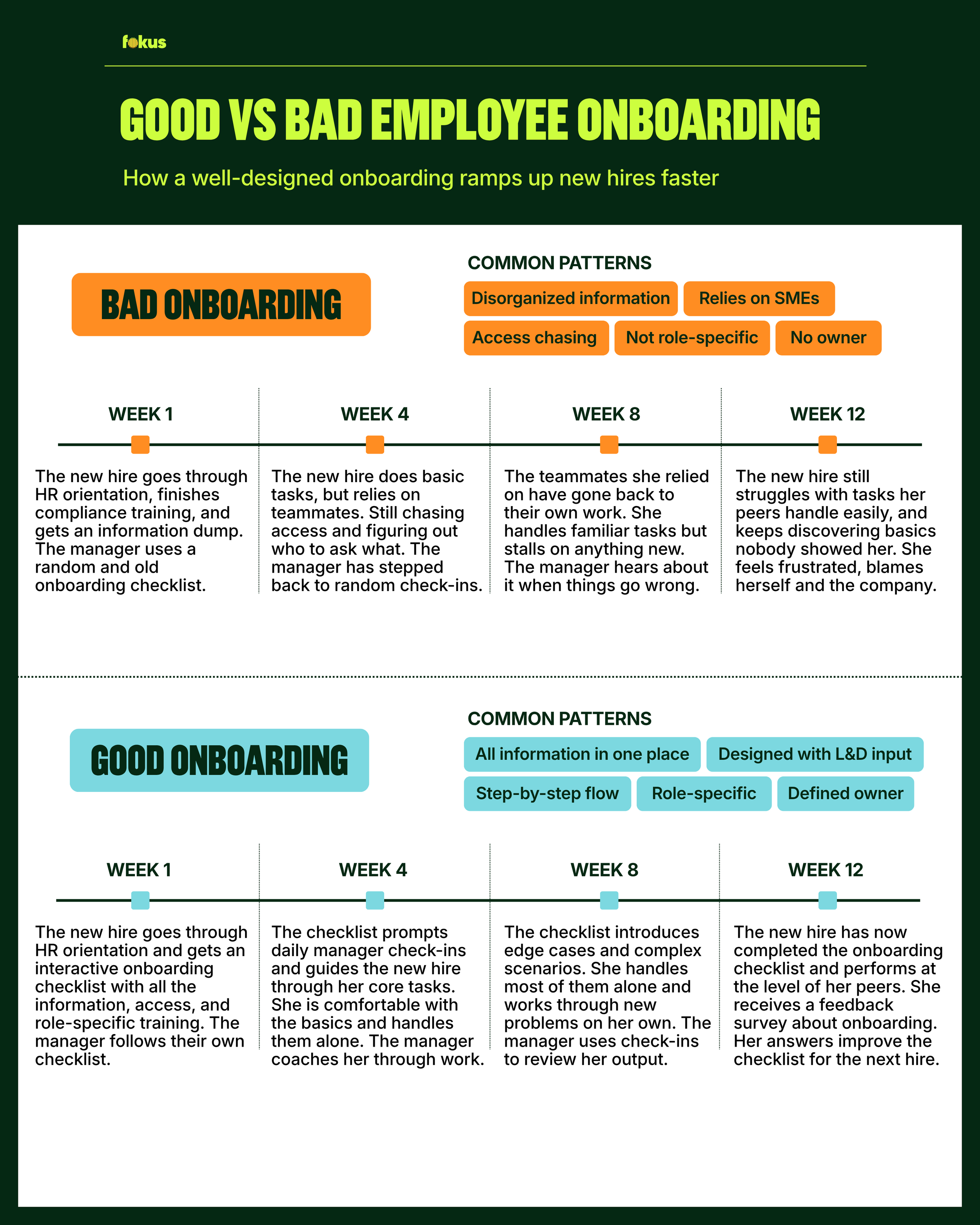
Shadowing reduces uncertainty for new hires by letting them observe real work being done well. Pair it with a buddy program, so learners have a safe person to ask questions they may hesitate to ask a manager.
To make shadowing effective, assign:
A focus for each shift, such as tools, talk tracks, or decision rules.
A debrief guide with reflection questions.
A small “now you try” task to build confidence.
This method is especially useful during onboarding and role transitions. If you are working to reduce time to proficiency, explore employee onboarding solutions that structure the ramp-up experience end-to-end.
8) Blended Learning to Combine Flexibility With Real Practice

Blended learning combines digital training with live practice, coaching, and on-the-job reinforcement. For many modern teams, it is one of the most effective employee training methods because it balances flexibility, speed, and skill transfer.
A simple blended structure looks like this:
Self-paced module for concepts, basics, and examples.
Live session for practice, coaching, and calibration.
On-the-job assignments using real work with support.
Reinforcement through microlearning and manager check-ins.
Blended learning is often the best choice when you need both scale and confidence in real-world performance.
How to Choose the Right Employee Training Methods
Use three practical filters to select the right approach.
1) Risk and Complexity
High-risk or complex skills often require instructor-led training or VILT, plus guided practice and feedback.
2) Scale and Consistency
If you are training many people across teams or locations, self-paced eLearning and standardized OJT reduce variation and keep expectations clear.
3) Transfer to the Job
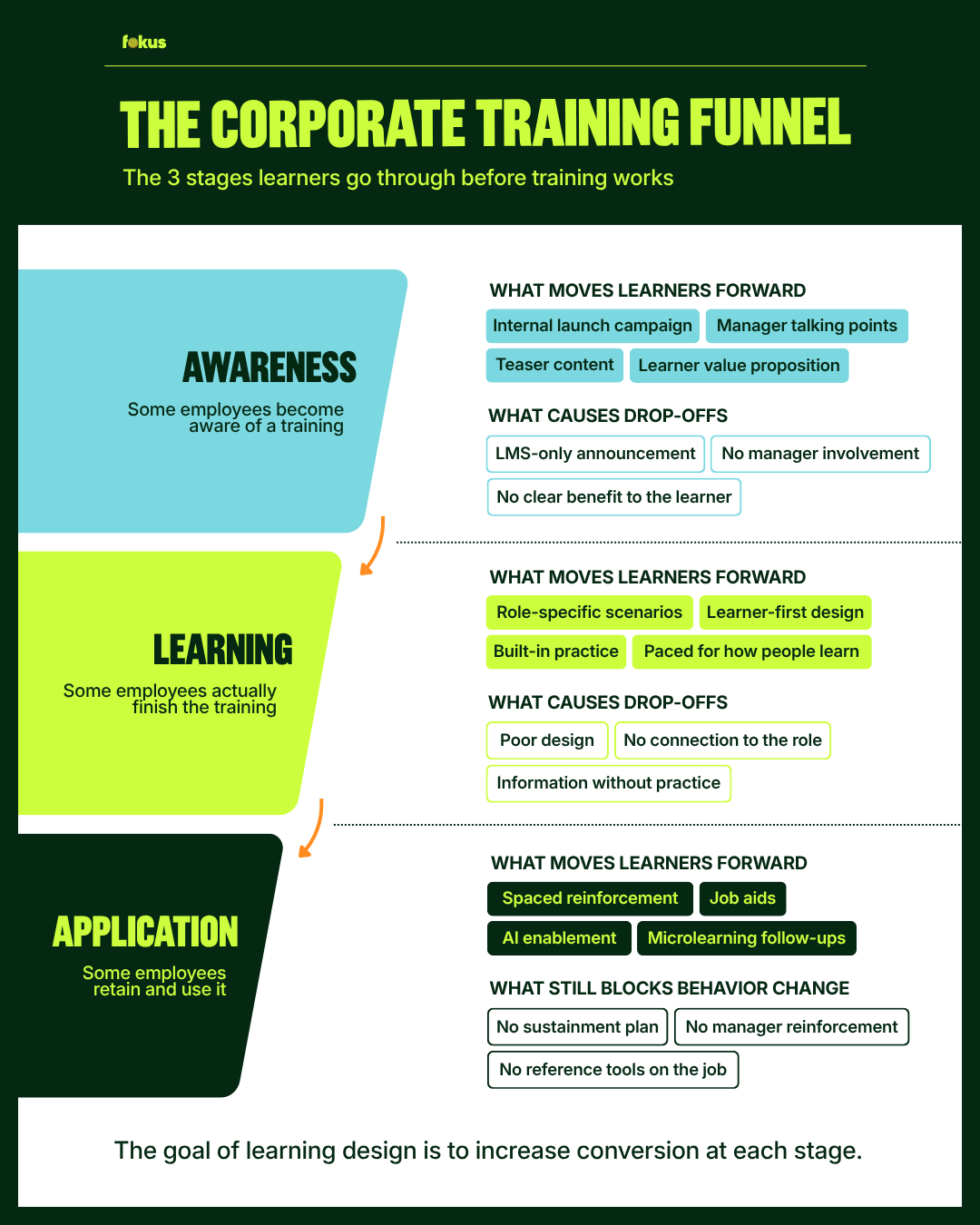
If behavior change is the goal, add coaching, observation, and reinforcement. Training that ends after a single event rarely changes performance.
It also helps to plan evaluation early so training stays connected to outcomes. Decide what success looks like, how it will be observed, and which metrics matter most.
Why Fokus Is a Trusted Partner for Modern Training
Fokus designs modern learning experiences that speed onboarding, strengthen soft skills, and support regulated teams with custom training, eLearning, and instructor-led programs. Their work focuses on practical performance, clear outcomes, and learning experiences that respect learners’ time.
If you need help selecting and blending employee training methods into a cohesive training strategy, explore instructional design services and how those services support real business goals.
Frequently Asked Questions
What Are the Most Effective Employee Training Methods for Modern Teams?
The most effective employee training methods combine practice, feedback, and reinforcement. Many teams use blended learning because it supports flexible delivery while still creating space for live practice and coaching.
How Do I Choose Between eLearning and Instructor-Led Training?
Use eLearning when you need consistent delivery at scale, especially for knowledge, tools, and onboarding content. Use instructor-led training when real-time discussion, practice, and feedback are critical.
What Is Microlearning Best Used For?
Microlearning is best for reinforcement, refreshers, and quick performance support. It works well when each asset focuses on a single outcome and supports a real task or behavior.
How Can I Measure Whether Training Is Working?
Start with the performance goal. Then measure completion and understanding, followed by on-the-job behavior change and business impact. Manager observation and performance metrics are often more meaningful than satisfaction scores alone.
How Can Fokus Help Improve Our Employee Training Methods?
Fokus can help you select the right mix of methods, design structured practice, build custom eLearning, and create instructor-led experiences that connect training to measurable performance outcomes.
Final Thoughts
The best employee training methods are the ones your team can apply quickly and sustain over time. Start with the performance goal, choose methods that fit your environment, and reinforce learning until it becomes a habit. If you want a modern training approach built around real work and measurable outcomes, Fokus can help you design the right solution.

Fokus
Fokus is a learning and development consultancy that helps organizations design modern, impactful learning experiences. We combine strategy, instructional design, and technology to create solutions that improve performance, build capability, and drive measurable business results.