How to Create a Training Needs Analysis That Drives ROI

Many organizations invest in training but still struggle to see results. The main reason is that training is often developed before the real problem is clear. Learning how to create a training needs analysis helps ensure training supports real performance and business goals, not just course completion.
This guide explains how to create a training needs analysis using a practical approach that aligns with how Fokus delivers instructional design services, corporate training, employee onboarding, and custom eLearning.
Key Takeaways:
A training needs analysis starts with business goals.
Training should focus on job performance, not assumptions.
Data reveals real skill gaps.
Not every problem needs training.
Prioritization protects time and budget.
Strong analysis leads to measurable ROI.
What Is a Training Needs Analysis?
A training needs analysis is a structured process used to identify gaps between current performance and expected performance. It helps organizations determine what employees need to do better and whether training is the right solution.
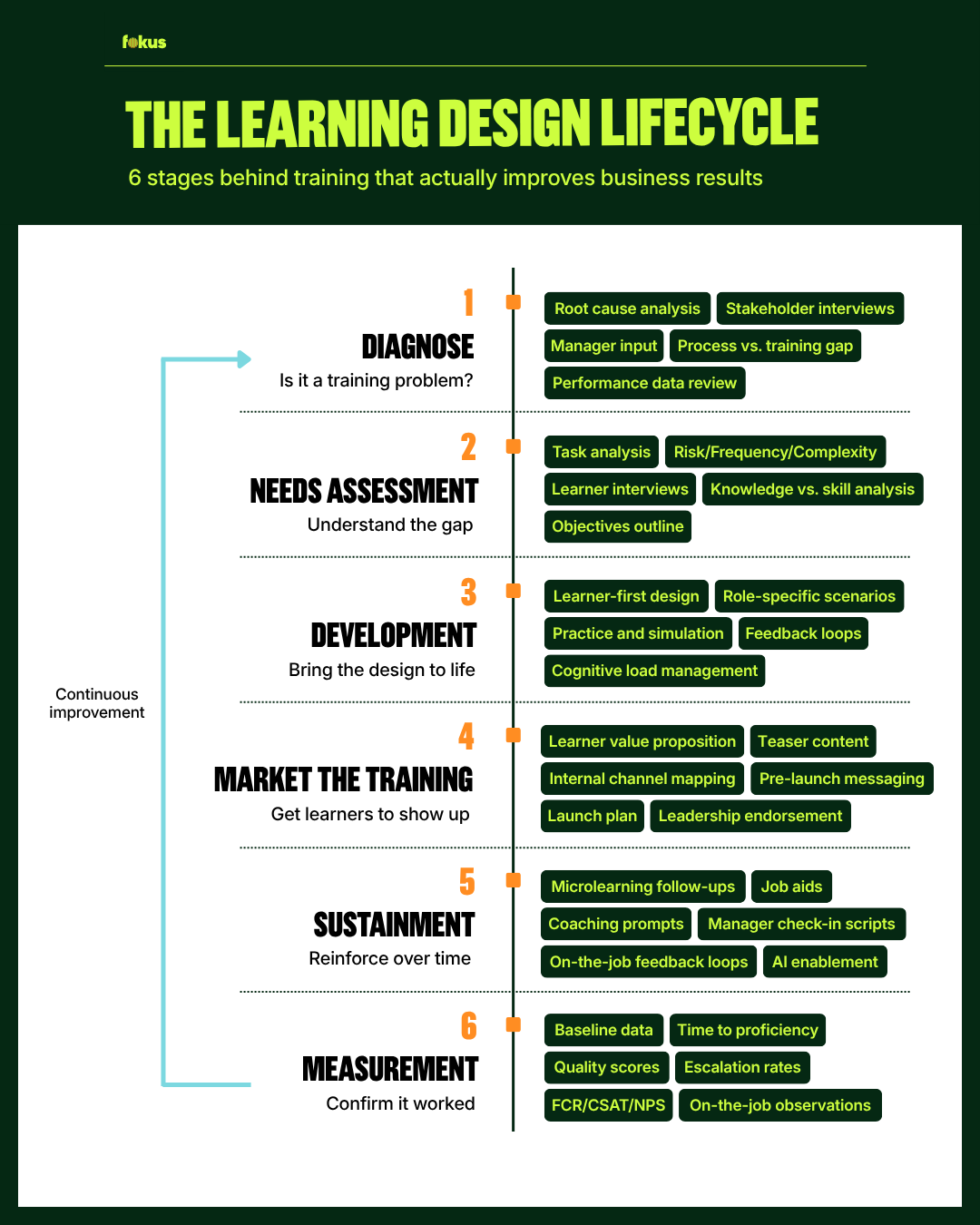
This process is the foundation of effective instructional design consulting services. Instead of guessing what content to build, learning teams rely on data, observations, and feedback to create training that supports real work outcomes.
Why a Training Needs Analysis Drives ROI
Training delivers ROI when it solves real performance problems. Without a training needs analysis, organizations often train everyone on the same topics, even when needs differ by role.
When teams understand how to create a training needs analysis, they can:
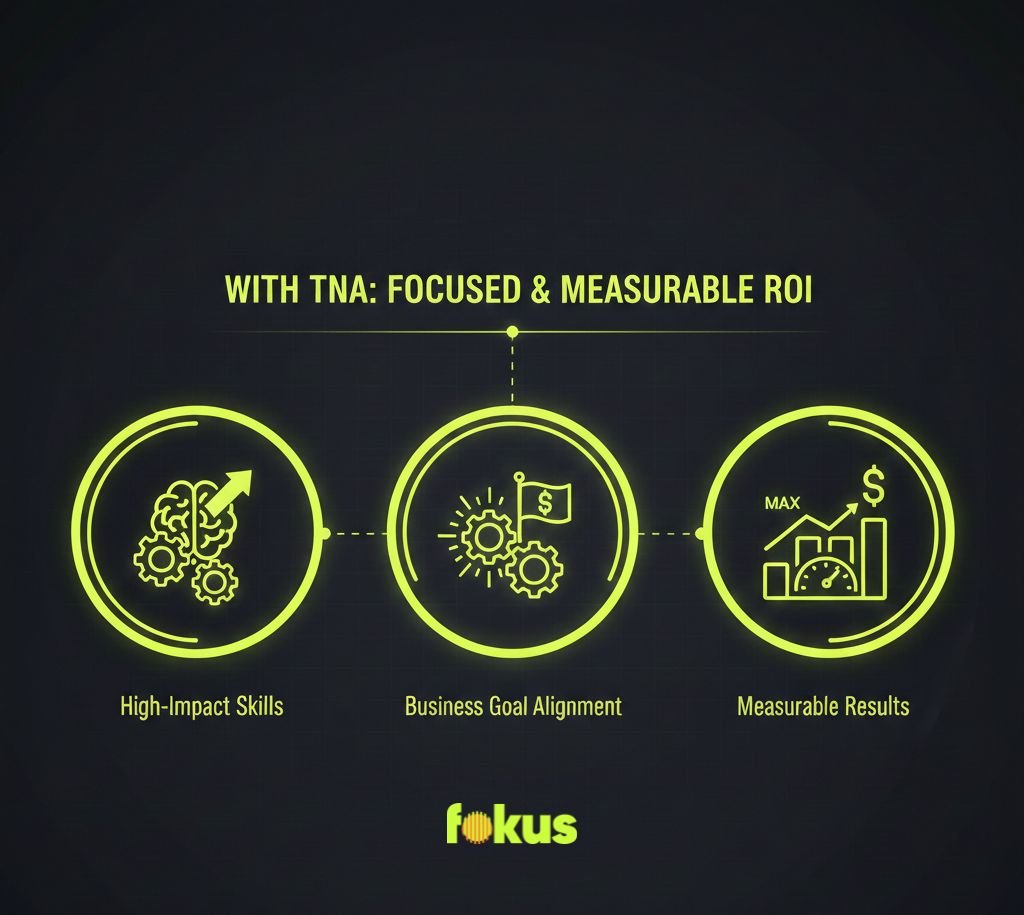
Focus training on high-impact skills.
Reduce unnecessary courses.
Improve speed to proficiency.
Support goals like quality, customer experience, and compliance.
This approach is critical in performance-driven corporate training, where learning must support clear business outcomes.
Step 1: Start With Business Goals
Ask questions like:
What problem are we trying to solve?
What does success look like on the job?
Which metrics need to improve?
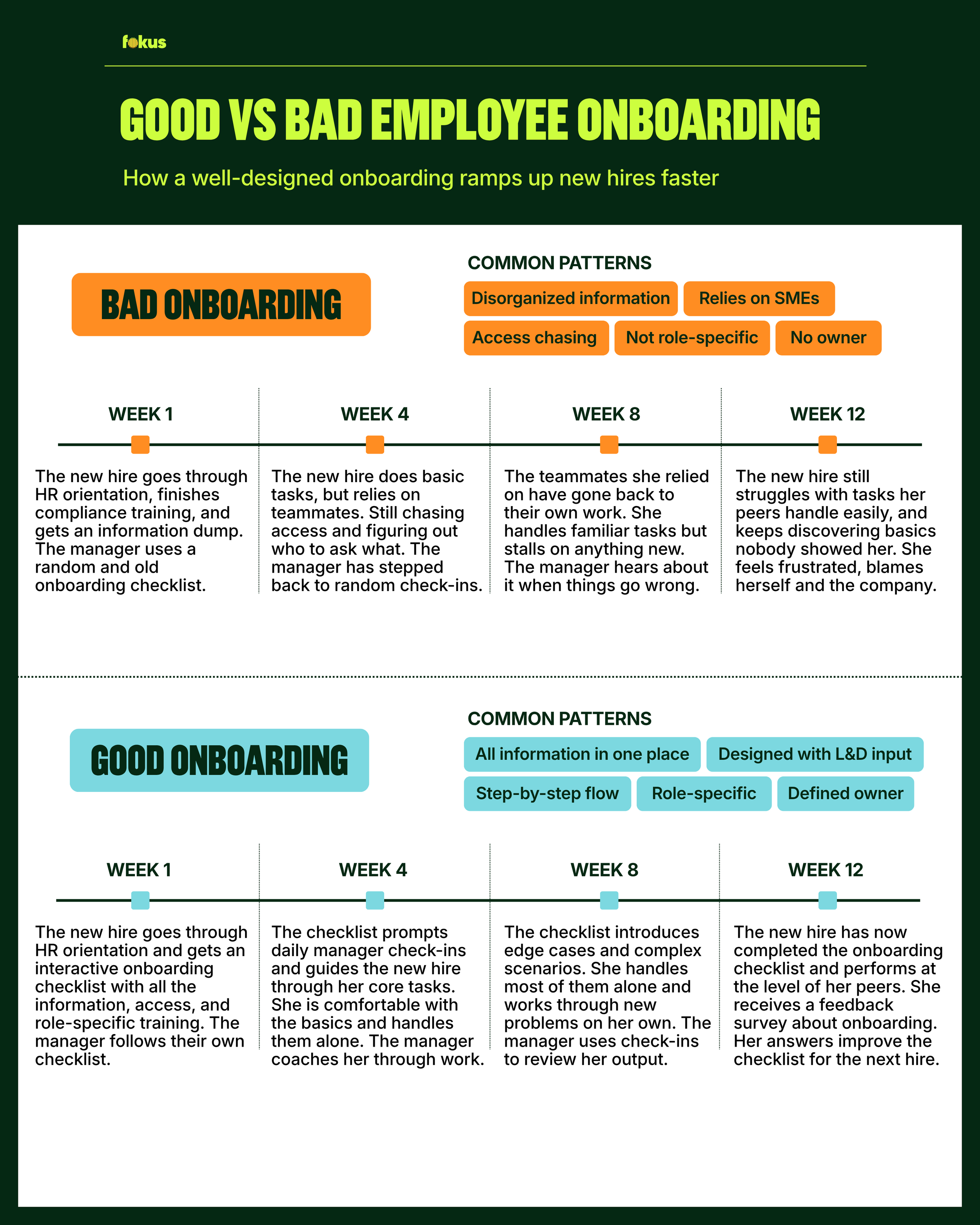
Common goals include faster onboarding, fewer errors, better customer service, or improved productivity. These goals often guide employee onboarding programs designed to reduce ramp-up time and improve early performance.
Step 2: Identify Performance Gaps
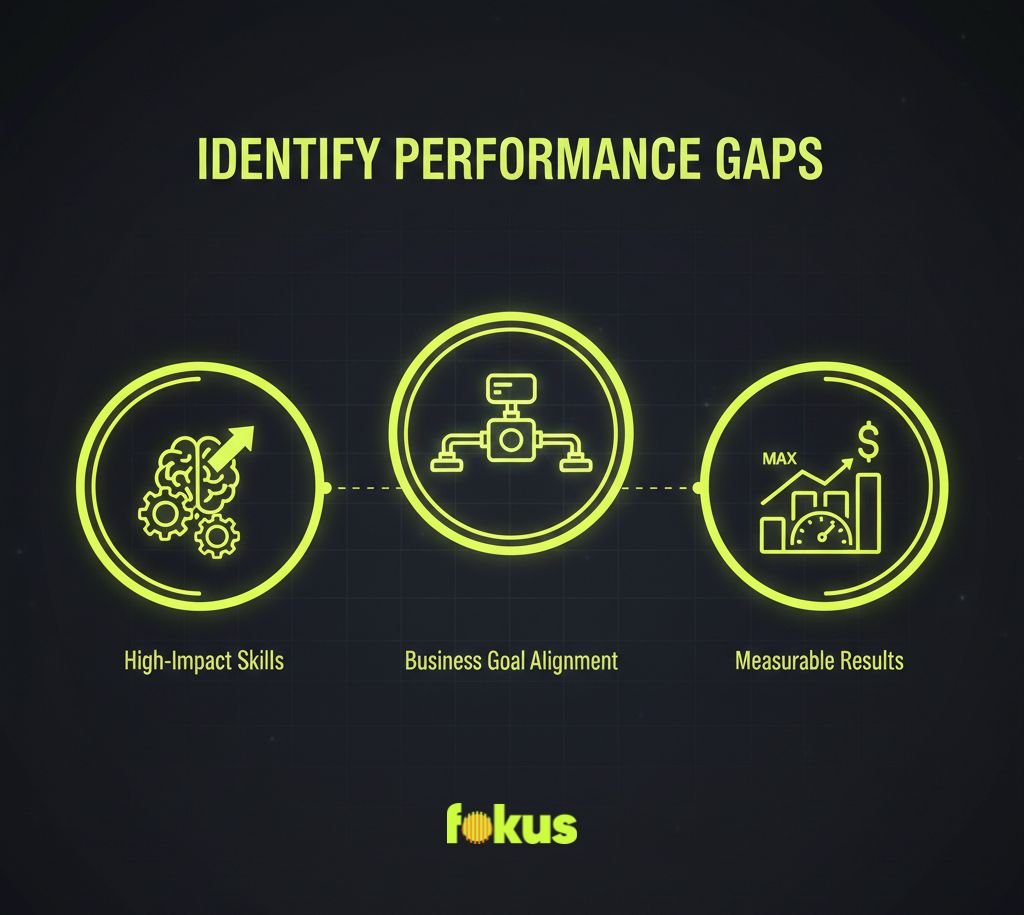
Next, compare what employees are doing now with what they should be doing.
Performance gaps often appear in:
Quality or audit scores
Customer feedback
Error rates
Missed targets
Manager observations
This step keeps the focus on performance, which is essential for building effective instructional design and training solutions.
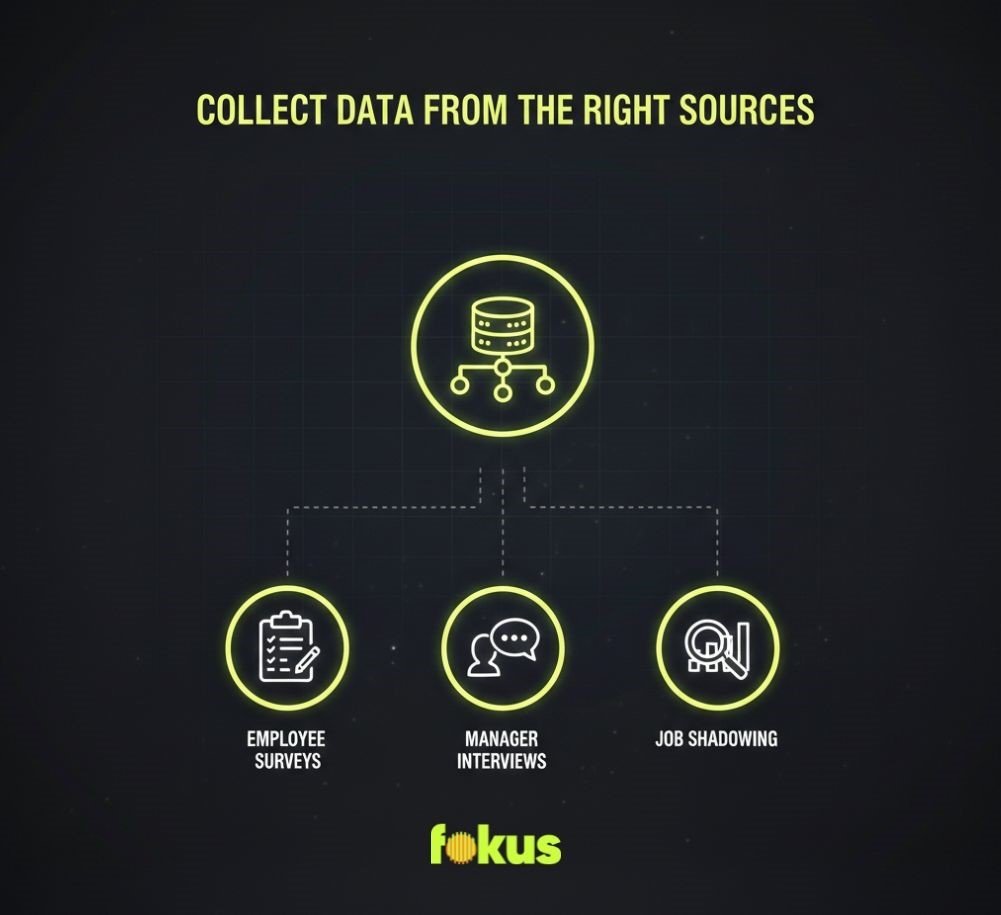
Step 3: Collect Data From the Right Sources
A strong training needs analysis uses information from multiple sources.
Useful methods include:
Employee surveys.
Manager interviews.
Job shadowing.
System and performance reports.
Customer feedback.
This data helps learning teams design training that reflects real work challenges. It is especially important when creating custom eLearning that must mirror real tasks and decisions.
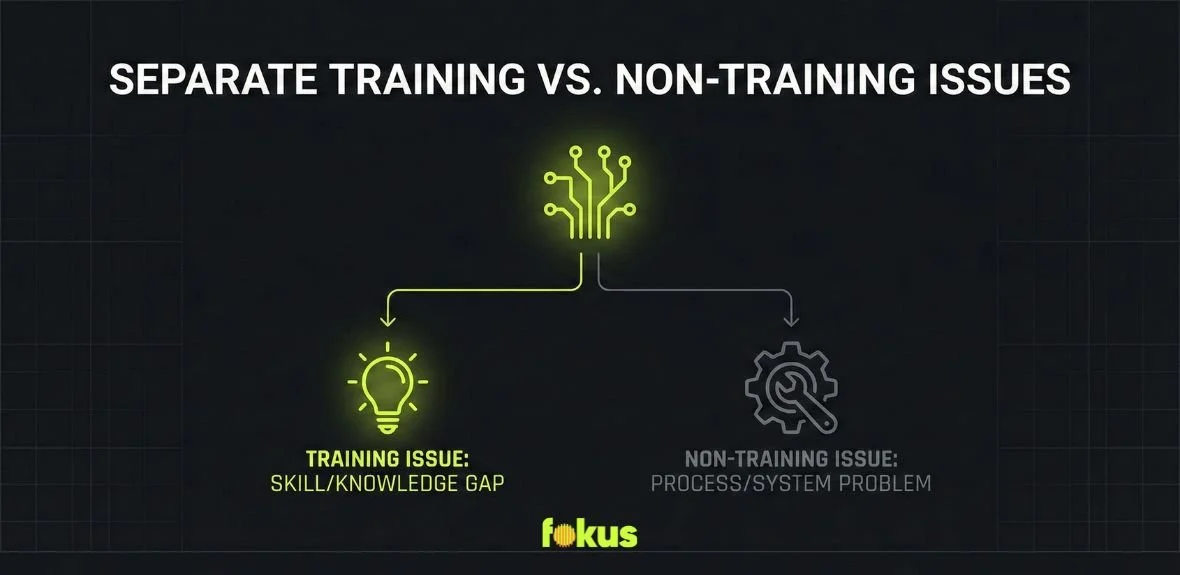
Step 4: Separate Training Issues From Non Training Issues
Not every problem can be solved with training. This is a critical step in learning how to create a training needs analysis.
Common non-training issues include:
Poor tools or systems.
Unclear processes.
Lack of feedback or coaching.
Staffing constraints.
Training works best when the issue is a skill or knowledge gap. Identifying this early protects ROI and ensures the right solution is used.
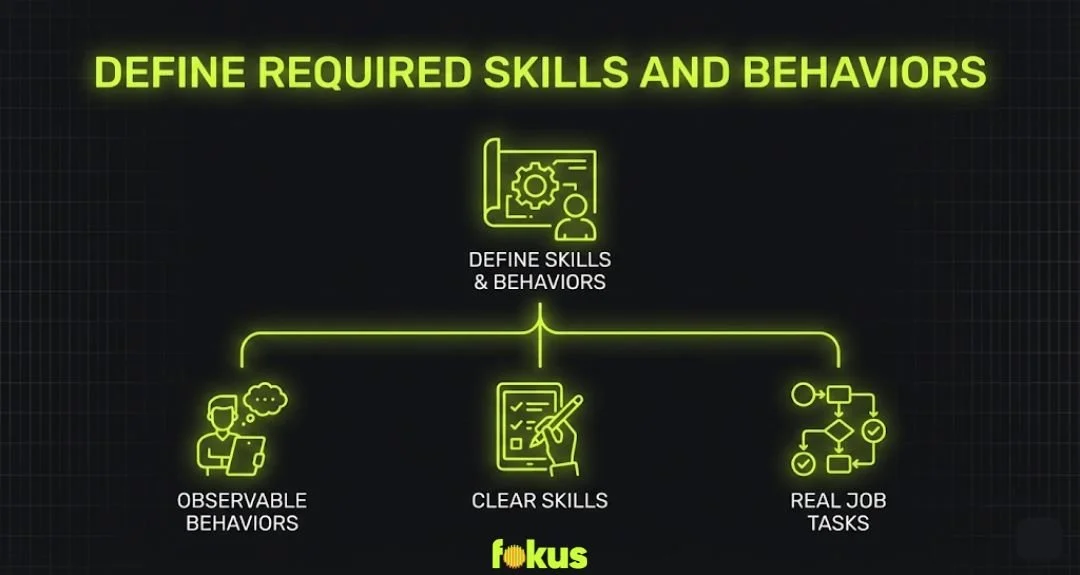
Step 5: Define Required Skills and Behaviors
Once training is confirmed as the solution, define what people must do differently on the job.
Focus on:
Observable behaviors.
Clear skills.
Real job tasks.
Avoid vague words like understand or know. Use clear actions such as resolve issues, follow procedures, or use tools correctly. This clarity supports stronger instructional design services and better learning outcomes.
Step 6: Prioritize Training Needs
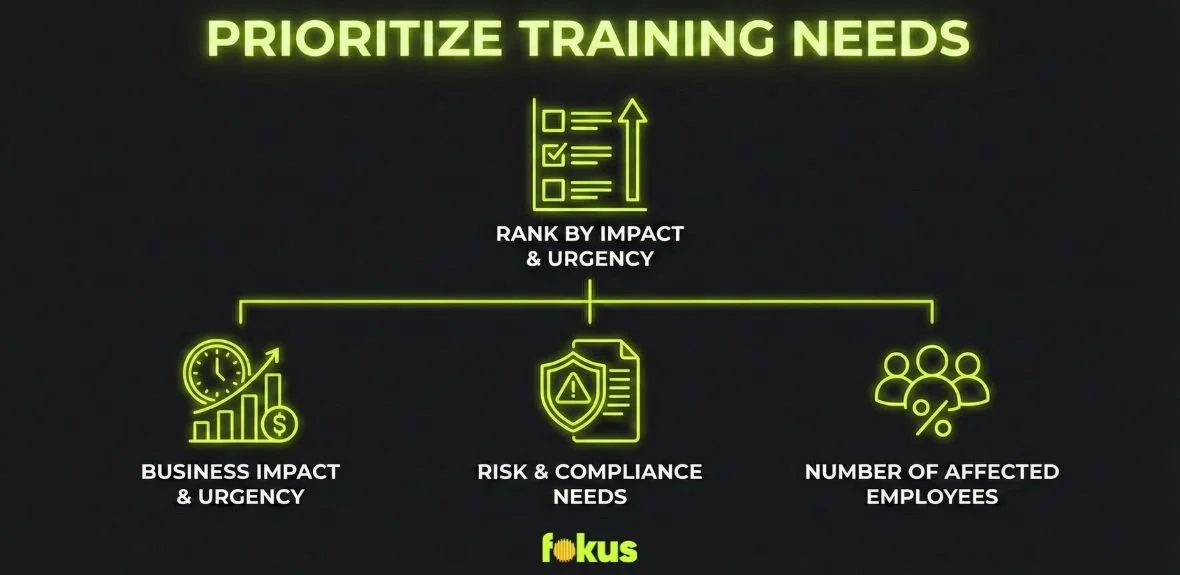
Not all training needs have the same impact. Prioritization helps organizations focus on what matters most.
Rank needs based on:
Business impact.
Risk or compliance needs.
Number of employees affected.
Urgency.
This ensures time and budget are invested where training can make the biggest difference.
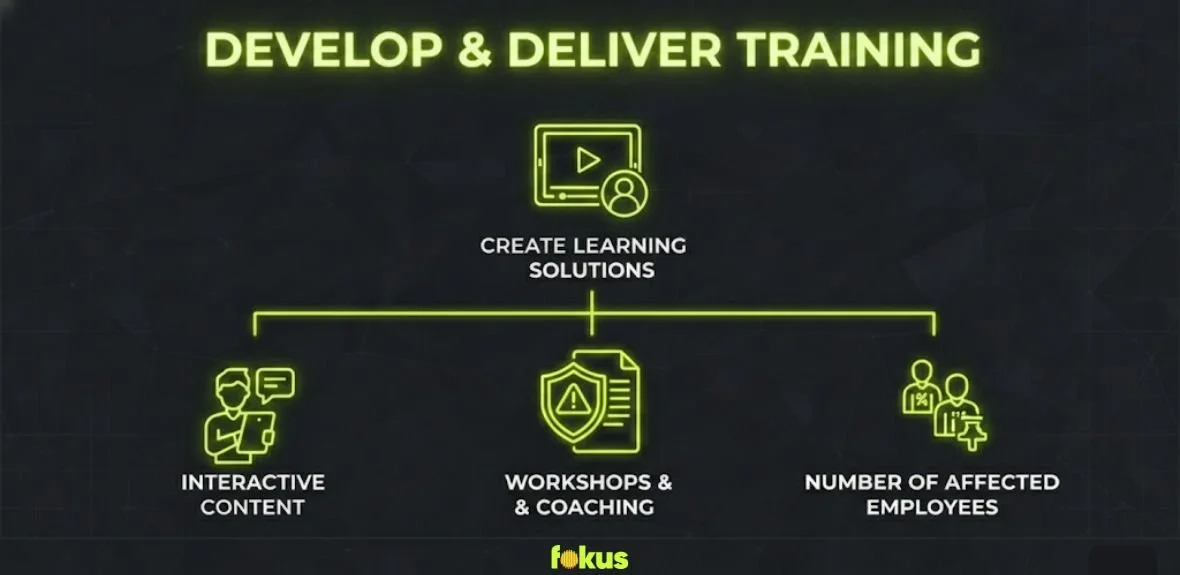
Step 7: Choose the Right Training Approach
After defining and prioritizing needs, decide how training should be delivered.
Custom eLearning for scale and consistency.
Instructor-led training for discussion and practice.
Blended learning for complex skills.
Job aids for quick support.
The delivery method should support the performance goal, not follow trends.
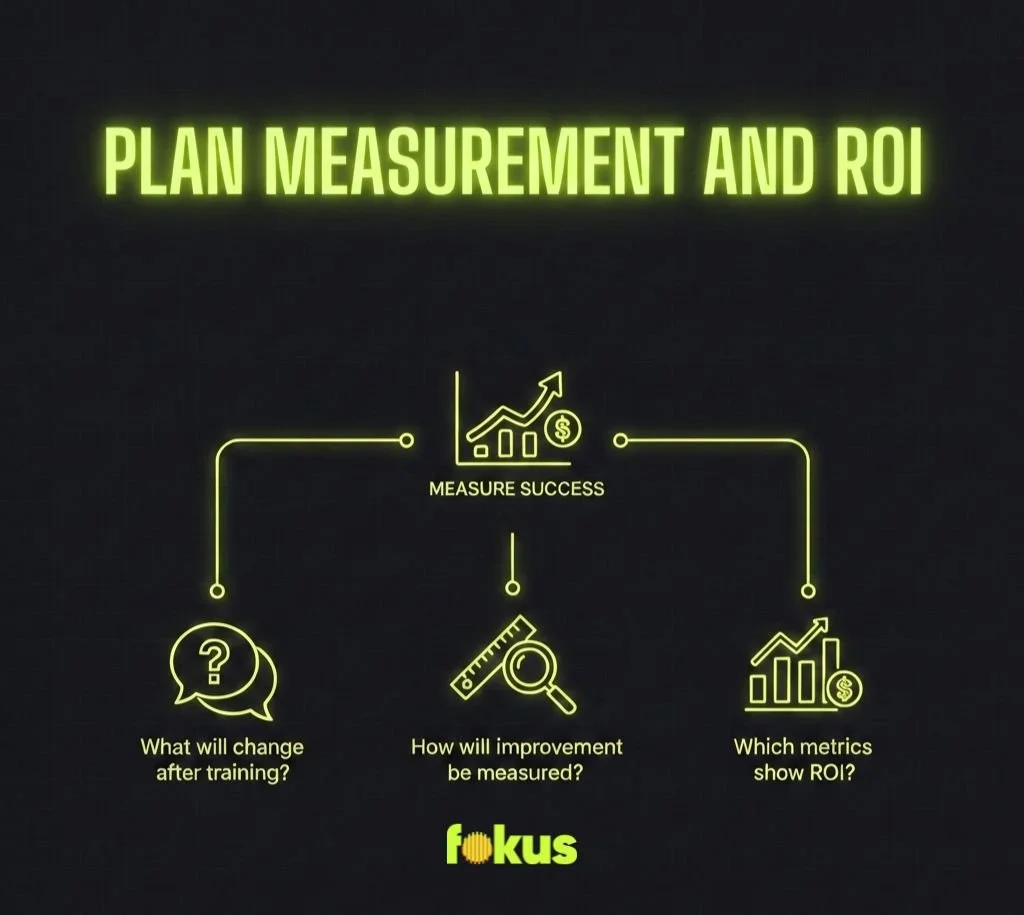
Step 8: Plan Measurement and ROI
An effective training needs analysis includes a clear plan to measure success.
Decide early:
What will change after training?
How will improvement be measured?
Which metrics show ROI?
This may include performance scores, quality metrics, productivity, or customer outcomes.
How Fokus Applies Training Needs Analysis
At Fokus, every learning solution starts with a training needs analysis. This ensures training addresses real performance gaps before any content is created.
This approach shapes all services, from instructional design services and corporate training to employee onboarding and custom eLearning. By grounding training in real work needs, organizations see faster ramp-up, stronger performance, and measurable results.
Frequently Asked Questions
What Is a Training Needs Analysis?
A training needs analysis identifies skill and performance gaps and helps determine whether training is the right solution. The focus is always on real job results.
Why Is Training Needs Analysis Important for ROI?
It links training to business goals from the start. This prevents wasted time and budget and makes training easier to measure.
Who Should Be Involved in a Training Needs Analysis?
Leaders, managers, employees, and learning teams should all be involved to provide a full view of goals and challenges.
When Should a Training Needs Analysis Be Conducted?
It should be done before creating new training or updating existing programs, especially when roles or performance expectations change.
How Can Fokus Help with Training Needs Analysis?
Fokus partners with organizations to identify real performance gaps and design targeted training that supports business goals and delivers ROI.
Final Thoughts
Learning how to create a training needs analysis ensures training is focused, practical, and aligned with business needs. When analysis comes first, training becomes more effective, and ROI follows naturally.

Fokus
Fokus is a learning and development consultancy that helps organizations design modern, impactful learning experiences. We combine strategy, instructional design, and technology to create solutions that improve performance, build capability, and drive measurable business results.