10 Required Trainings for Employees in Regulated Industries

In regulated industries, required trainings for employees are not just a box to check. They help protect people, data, and your business. The right training plan also makes audits less stressful and helps new hires do the job right from day one.
Key Takeaways
Four main training types: compliance, safety, security, and role skills.
Train early, refresh often, and track completions.
Use real examples and quick checks to prove learning.
Blend short eLearning with coaching to reduce risk.
Fokus can build clear, compliance-ready training.
What “Required Trainings for Employees” Really Means in Regulated Work
“Required” can mean different things:
Required by law or regulation (example: privacy rules in healthcare or data protection rules in many regions).
Required by safety rules (example: training tied to hazards and equipment).
Required by industry standards and contracts (example: rules for handling customer payment data).
Required by your internal policies (example: code of conduct, reporting, and quality processes).
If you want help planning a full training roadmap, we can help you build a plan based on job goals, not just content.
10 Required Trainings for Employees in Regulated Industries

These trainings for employees cover the most common risks in regulated industries. Some apply to everyone, like ethics and security, while others depend on the role and work setting.
1) Code of Conduct and Ethics Training
This sets the baseline for decision-making, conflicts of interest, gifts, insider information, and reporting concerns.
Best for: Everyone, including contractors.
Keep it strong: Use short scenarios that match real situations people face.
2) Anti-Harassment and Respectful Workplace Training
Many organizations treat this as mandatory because it reduces risk and supports a safe culture.
Best for: Everyone, with extra modules for managers.
Keep it strong: Teach what to do, how to report, and what “no retaliation” means.
3) Data Privacy and Personal Data Handling
If your teams process personal data, privacy training is essential.
Best for: Anyone who handles customer, patient, or employee data.
Keep it strong: Train on data-sharing basics, clean desk habits, and safe storage.
4) Cybersecurity Awareness and Phishing Training
Cyber risk changes fast, and regulated teams are common targets.
Best for: Everyone, especially frontline and support teams.
Keep it strong: Practice spotting phishing, using multi-factor login, reporting suspicious events, and safe device use.
5) Information Security and Access Control Training
This training covers secure access, passwords, device handling, and permission rules.
Best for: Anyone with system access, plus admins and managers.
Keep it strong: Explain the least access needed, how to request changes, and how to handle shared tools.
6) Workplace Safety and Hazard Awareness Training
Safety training is required when hazards exist and must match the risks of each role and location.
Best for: Manufacturing, warehouses, field teams, labs, and any site with hazards.
Keep it strong: Focus on real hazards, safe steps, and how to speak up quickly.
7) Emergency Response Training
This includes fire response, evacuation, severe weather steps, lockdown actions, and incident reporting.
Best for: Everyone, with location-based details.
Keep it strong: Run short drills, then offer quick refreshers.
8) Role-Based Compliance Training
This is where regulated industries get serious. Different roles have different rules and risks.
Examples:
Healthcare: privacy steps and safe handling of patient data
Finance: fraud prevention, records, and customer protection basics
Pharma and life sciences: quality rules, documentation habits, and controlled processes
Best for: Anyone with regulated tasks.
Keep it strong: Use “choose your next step” practice, not long policy slides.
9) Quality Management and Documentation Training
In regulated teams, good documentation is part of compliance. This training covers SOP use, controlled documents, and clear records.
Best for: Quality, operations, labs, production, and customer-facing roles with strict processes.
Keep it strong: Teach what “good documentation” looks like using examples and non-examples.
10) Communication, De-escalation, and Professional Soft Skills
Soft skills are often treated as “nice to have,” but regulated environments need them. Poor tone, unclear messages, or slow escalation can become a compliance issue.
Best for: Support teams, call centers, sales and service teams, and managers.
Keep it strong: Use role-play, message practice, and real customer cases.
How to Deliver Training to Employees Without Boring Them
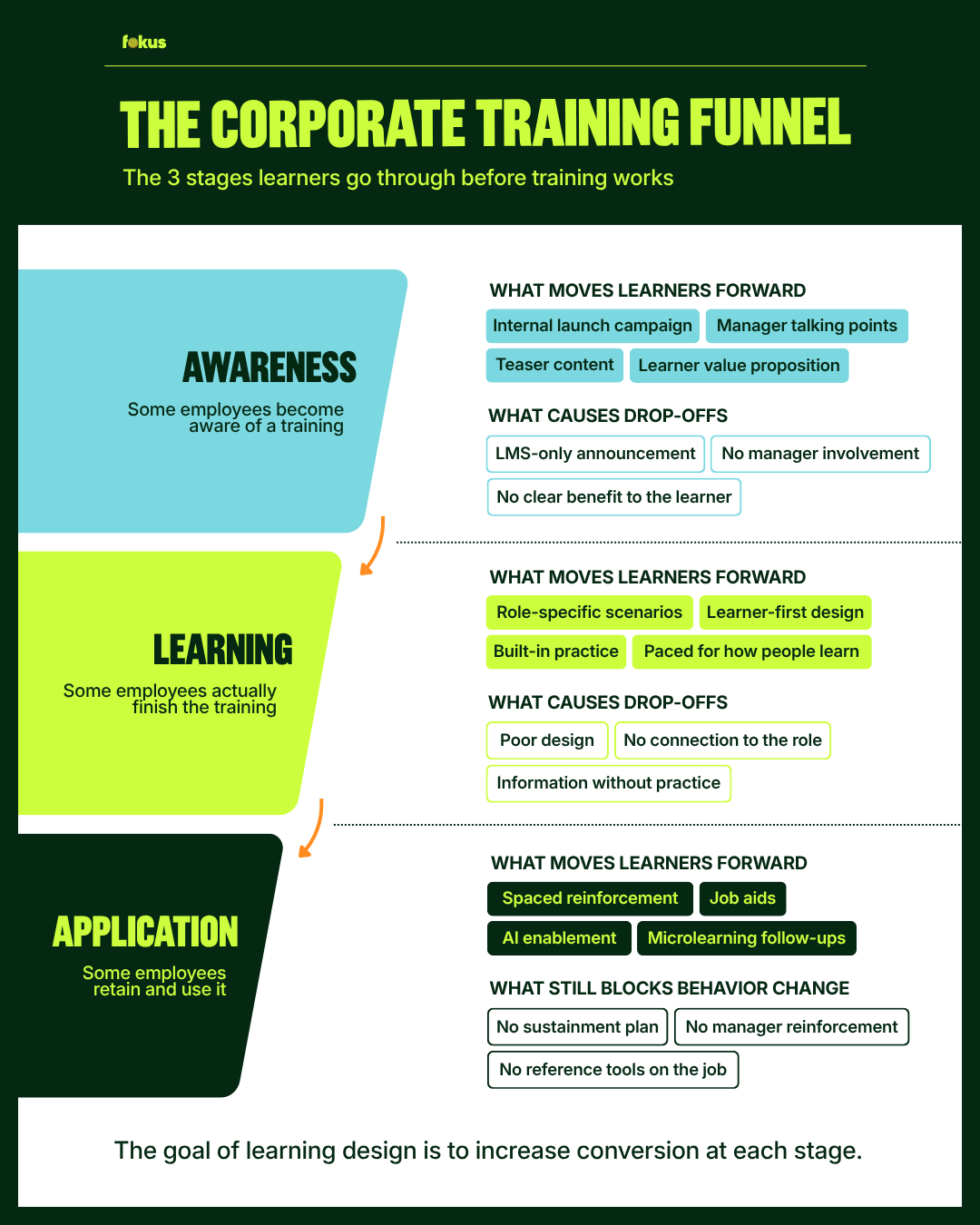
To keep required trainings for employees engaging, focus on real job situations and deliver the content in short, practical lessons people can use right away.
Build Training Around the Job
Start with what people must do on the job, then teach the rules that support those actions. This keeps training practical and easier to remember.
Use A Blended Training Format
A strong plan often includes:
Short eLearning for basics.
Live practice for tough calls and judgment.
Manager coaching and quick check-ins.
If you need training built for real teams and real work, explore instructional design services that focus on practice, not just information.
Keep It Audit-Ready

For regulated teams, you should be able to show:
Who completed training.
When they completed it.
What content they covered.
Scores or proof of understanding.
Retraining steps, if needed.
Fokus Can Help You Design Compliance-Ready Trainings
Fokus designs modern learning experiences that speed onboarding, strengthen soft skills, and support regulated teams with custom training, eLearning, and instructor-led programs. The goal is simple: training that respects time, stays role-specific, and supports long-term performance.
If you are updating required-trainings for employees, Fokus can help you:
Turn complex rules into simple steps.
Build scenario-based practice for high-risk moments.
Create training that is easy to update when rules change.
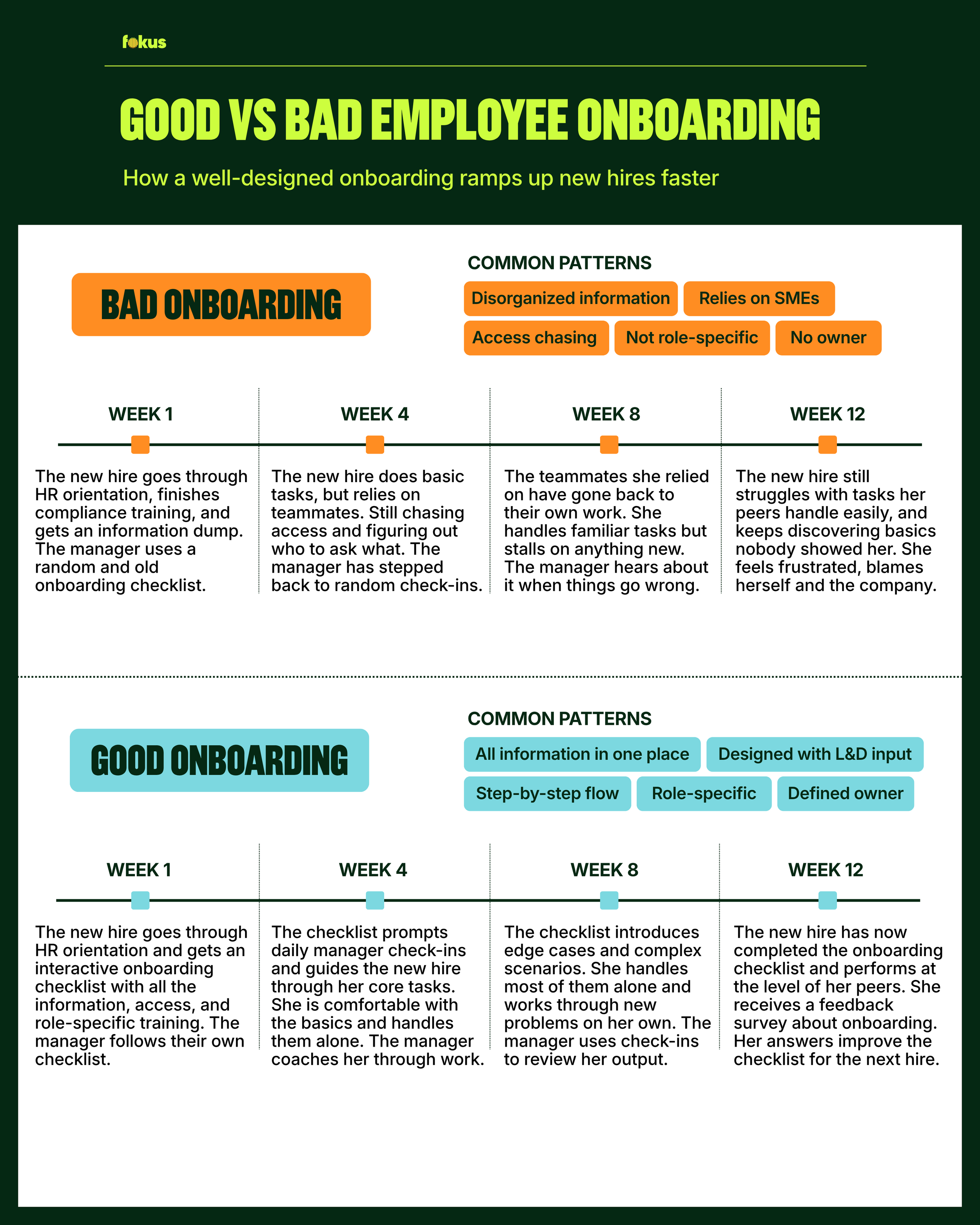
For regulated new hire ramp-up, review employee onboarding training solutions designed to reduce time-to-proficiency while staying compliant.
If you need scalable modules across teams and locations, consider custom eLearning design for consistent, trackable training that is easier to maintain.
Frequently Asked Questions
What are required trainings for employees in regulated industries?
They are training programs an organization must deliver to meet laws, safety rules, standards, and internal policies. They often include compliance, safety, privacy, and security topics.
How often should required trainings for employees be repeated?
Many companies run annual refreshers for core compliance topics, plus extra training when a role changes, a process changes, or an incident occurs. High-risk topics like phishing may be trained more often.
How do I know which trainings are required for my company?
Start with your regulators, your contracts, and your internal risk team. Then map each role to the rules and tasks that role performs. Keep a training matrix so nothing is missed.
What is the best format for compliance training?
Short, role-based learning with real examples works best. Mix quick eLearning with manager coaching and hands-on practice for high-risk decisions.
How can Fokus help with required trainings for employees?
Fokus can design a full compliance-ready training program, build custom eLearning, and create instructor-led sessions that use real scenarios and clear assessments. This helps employees learn faster, reduce mistakes, and make audits easier.
Final words
In regulated environments, required trainings for employees protect people and reduce risk. When training is clear, role-based, and built around real work, it becomes more than compliance. It becomes better performance.

Fokus
Fokus is a learning and development consultancy that helps organizations design modern, impactful learning experiences. We combine strategy, instructional design, and technology to create solutions that improve performance, build capability, and drive measurable business results.