Blended Learning in Corporate Training: A Complete Guide
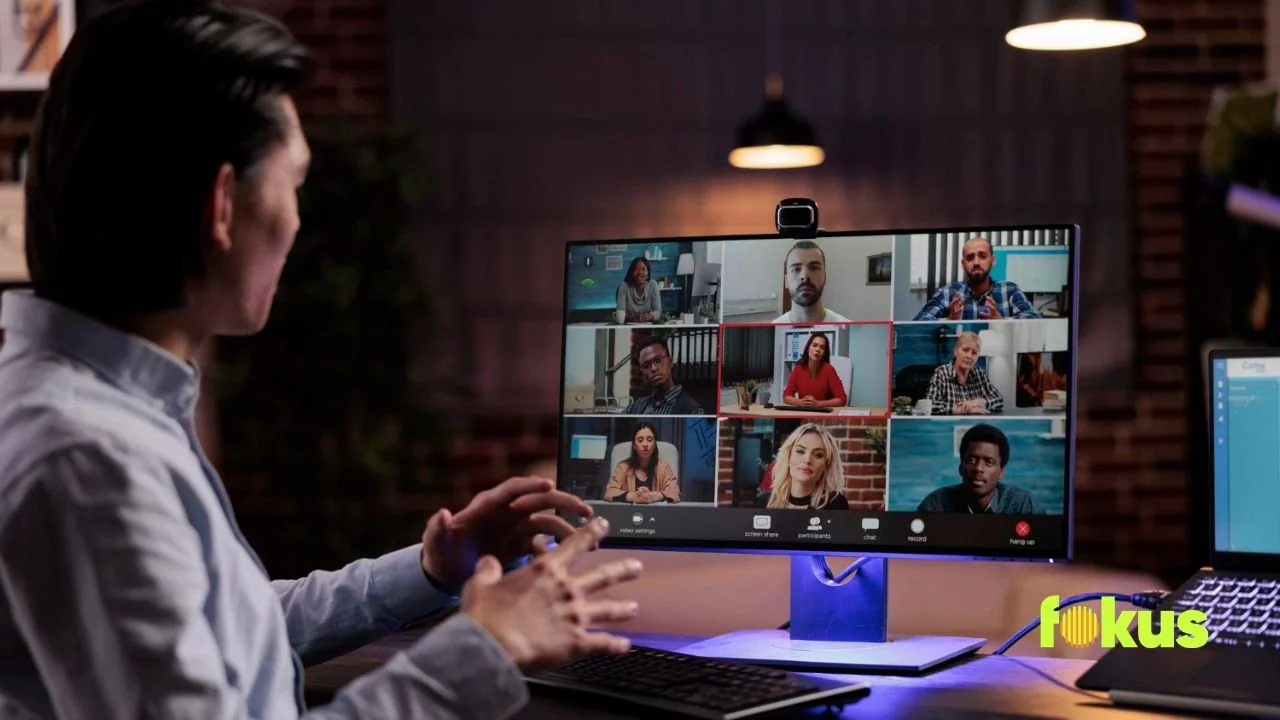
Blended learning in corporate training helps organizations deliver flexible, engaging learning journeys that scale, without losing the human coaching and practice that build real capability.
When digital learning and instructor-led sessions are designed as a single connected experience, teams can reduce time away from work, improve consistency, and speed up time-to-proficiency.
Key Takeaways
Use each modality with intent, not duplication.
Design around performance outcomes and real work.
Connect pre-work, live practice, and reinforcement.
Measure behavior change, not just completion.
What Blended Learning in Corporate Training Means
Blended learning combines digital learning and instructor-led training into one cohesive program aligned to a single set of outcomes. In corporate settings, it often includes self-paced modules for foundational knowledge, live sessions for practice and feedback, and reinforcement activities that support on-the-job application.
Common reasons organizations adopt blended learning include:
Serving distributed teams without sacrificing interaction.
Scaling onboarding while maintaining quality and consistency.
Reducing travel and logistics while keeping high-value practice time.
Supporting regulated teams where accuracy, confidence, and consistent behaviors matter.
Blended programs can struggle when they become a collection of disconnected parts. To avoid that, treat every component as part of one journey. Learners should always understand what to do next, why it matters, and how it connects to the live session and their daily work.
Blended Learning Models for Corporate Training
There is no single best blend for every team. The right model depends on risk, complexity, time constraints, and how much coaching is needed for transfer.
Enriched Virtual Model
Learners complete most content online and attend scheduled live sessions for application and feedback. This model is useful when you need scale and flexibility, but still want facilitated practice.
Flex Model
A self-paced core path is paired with optional office hours, coaching sessions, and peer practice. This fits audiences with different experience levels because learners can spend more time where they need it.
Workshop With Digital Reinforcement
A focused workshop anchors the experience, while follow-up digital reinforcement drives retention and transfer. This approach works especially well for soft skills, leadership, and customer-facing conversations where practice and reflection matter.
Rotation Style for Workplace Skills
Learners rotate through learning stations such as short eLearning modules, small-group practice, facilitator-led debriefs, and structured on-the-job tasks. This model is strong for process training, safety-critical roles, and regulated environments.
A useful design principle is simple: use online learning to prepare and reinforce, and use live sessions to practice and improve.
How to Design a Blended Learning Program That Performs
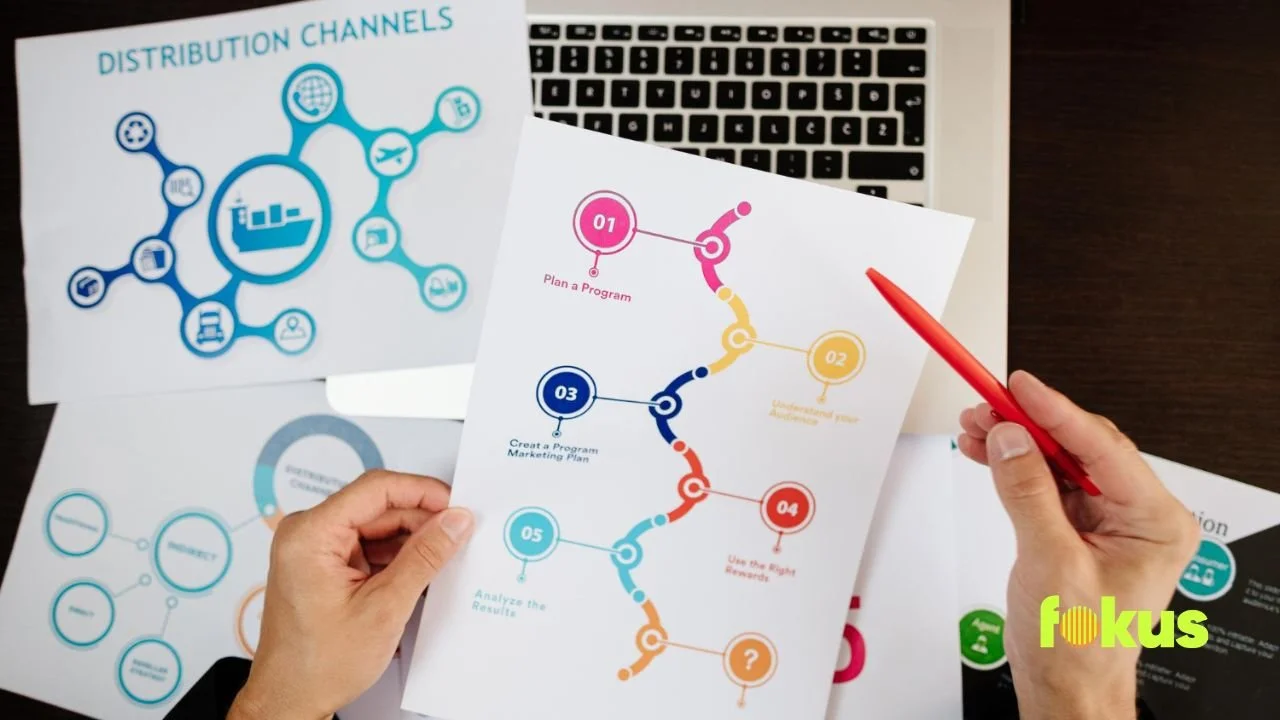
Designing blended learning in corporate training is easier when you follow a clear build sequence.
1) Start With Performance Outcomes
Define what learners must do on-the-job. Avoid vague goals like “understand the policy.” Instead, use observable outcomes such as:
Apply an escalation framework to de-escalate a customer interaction.
Complete a regulated workflow with zero critical errors.
Use a system to perform a task within an expected quality standard.
If you want to support mapping outcomes to business goals and job tasks, consider partnering with a team that provides an end-to-end learning strategy and builds support through instructional design services.
2) Match Each Outcome to the Best Modality
Select formats based on what learners need to do, not what is easiest to build.
Knowledge and concepts: self-paced microlearning, short videos, and quick checks.
Skills and judgment: live practice, role plays, scenario discussions, and coaching.
Tool proficiency: guided simulations, sandbox tasks, and practice assignments.
Reinforcement: job aids, prompts, spaced practice, and manager check-ins.
A practical rule applies here: if feedback improves performance, design a live or coached activity. If repetition drives retention, plan reinforcement after the live session.
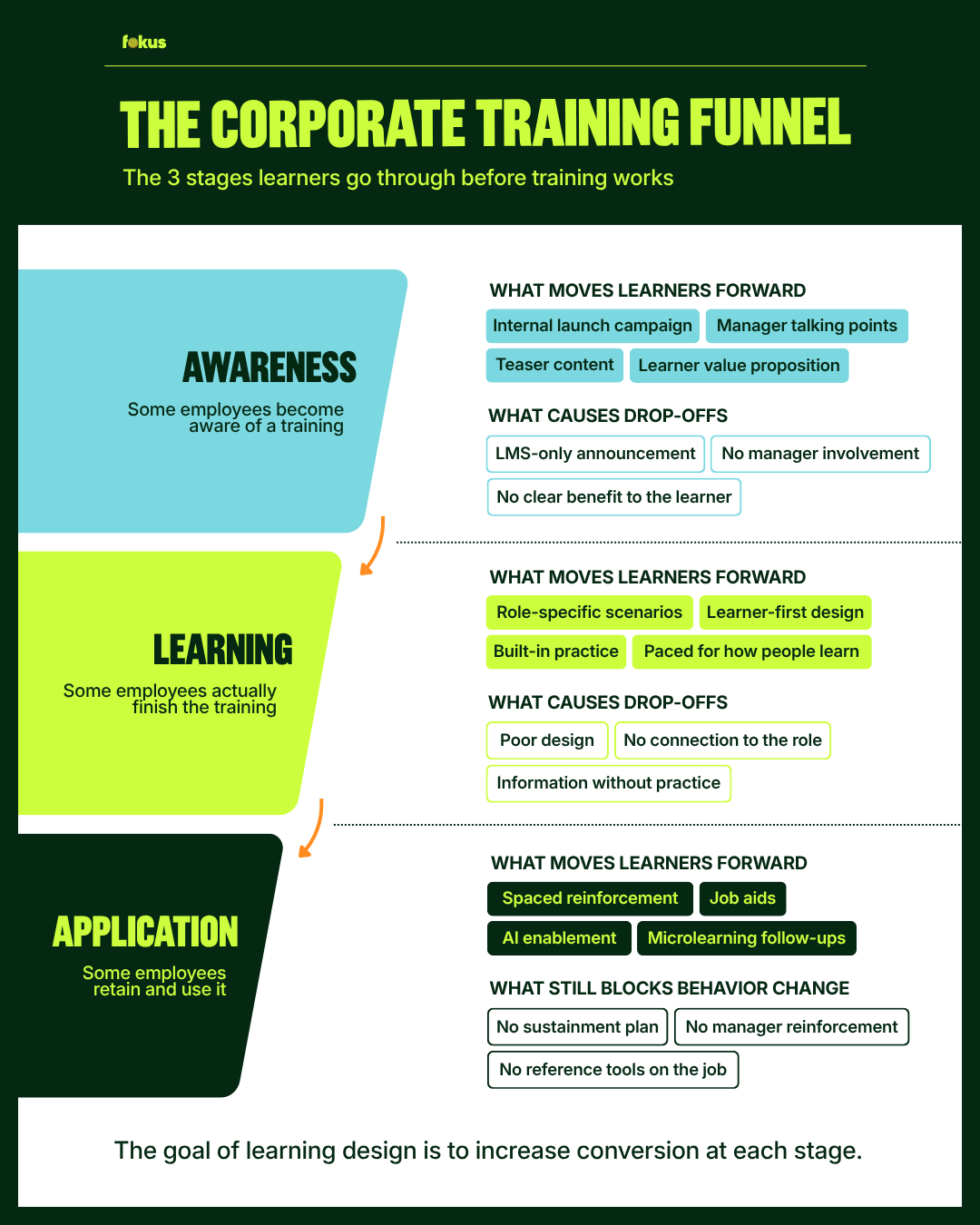
3) Build One Connected Learning Journey
Design clear handoffs so each part sets up the next:
Pre-work introduces the “why,” core concepts, and baseline scenarios.
Live training deepens application through practice, debriefs, and coaching.
Post-work reinforces and validates transfer with short, job-relevant practice.
This is also where instructional design for corporate training helps unify content, practice, and operational realities into one coherent experience.
4) Design Reinforcement for Transfer
If the goal is behavior change, plan for the first few weeks after training. Effective options include:
Two short scenario challenges per week for three weeks.
A one-page job aid used during real tasks.
A manager observation checklist with coaching prompts.
Peer practice sessions using a structured script.
5) Pilot, Improve, Then Scale
Run a pilot with a representative audience, not just high performers. Collect feedback from learners and facilitators, as well as early performance signals, such as quality checks or supervisor observations. Then refine quickly before rolling out broadly.
Tools and Systems That Support Blended Learning

Blended learning succeeds when the learner experience is simple, and the admin experience is manageable. Your technology should reduce friction, not add steps.
A strong toolkit often includes:
An LMS or LXP to organize the journey, deliver modules, and track progress.
Virtual classroom tools for live facilitation, breakouts, and collaboration.
Scenario-based eLearning that mirrors real decisions and conversations.
Facilitator guides and participant materials to keep practice consistent.
Performance support tools like checklists, templates, and quick references.
If your program relies on interactive practice, brand-aligned experiences, or scenario-based modules, investing in custom eLearning design can increase engagement and consistency across cohorts.
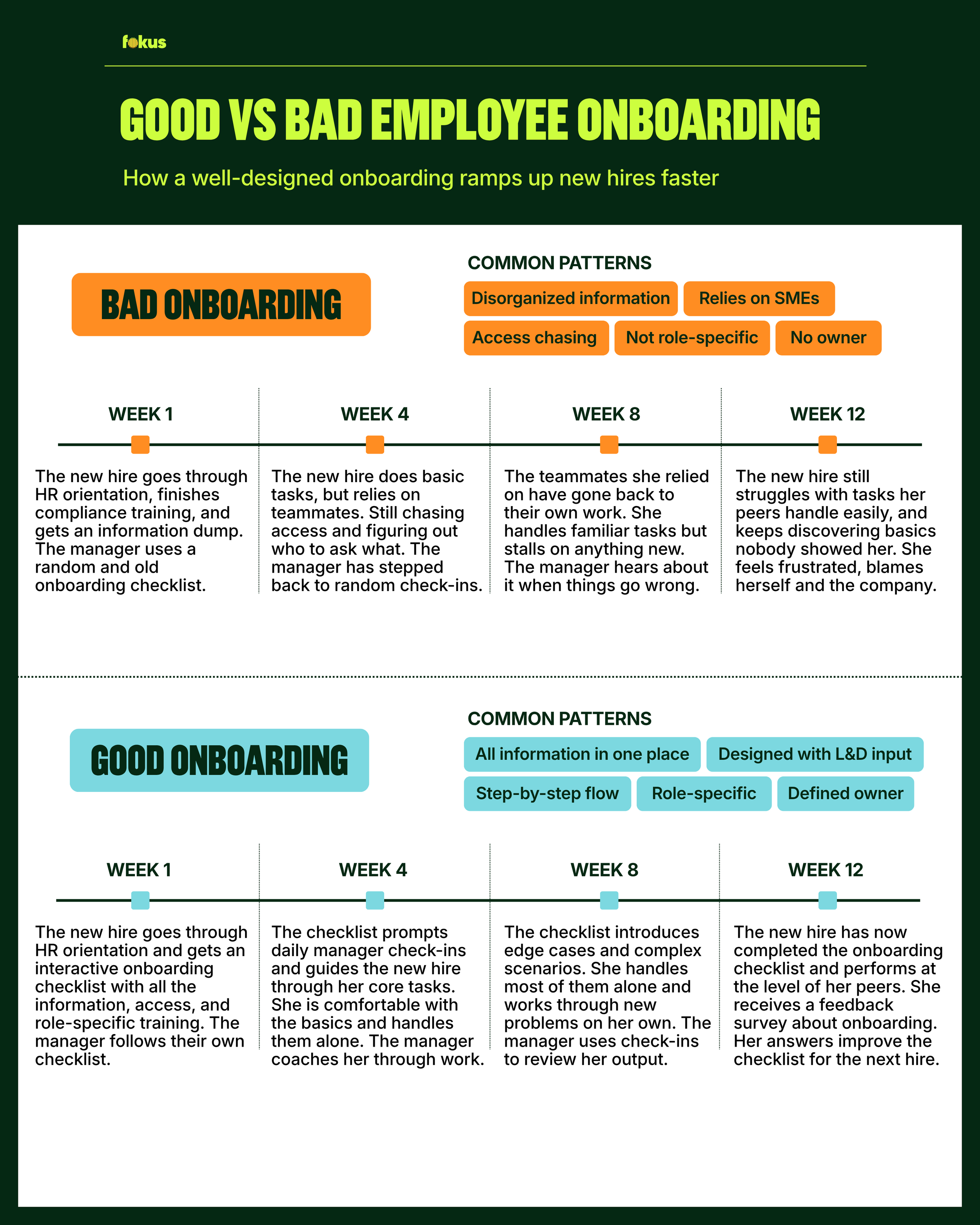
For onboarding, blended learning is especially powerful because it reduces overwhelm while accelerating capability. A structured approach to employee onboarding training solutions helps new hires learn essentials quickly and practice role-specific skills early.
Measuring Blended Learning Effectiveness
Measure blended learning in corporate training using a mix of leading indicators and performance outcomes.
Track leading indicators that show whether the program is working as designed:
Completion of the critical path.
Scenario scores and practice participation.
Live session attendance and engagement.
Track transfer and business indicators that show whether performance is changing:
Supervisor observation scores using a consistent rubric.
QA results, error rates, rework, or compliance incidents.
Time-to-proficiency for new hires.
Customer outcomes such as CSAT, escalations, or first-contact resolution.
Keep the measurement plan focused. Choose a small set of metrics that connect directly to outcomes and can be monitored consistently.
How Fokus Helps You Build Blended Learning That Drives Performance

Fokus designs modern learning experiences that speed onboarding, strengthen soft skills, and support regulated teams with custom training, eLearning, and instructor-led programs.
The emphasis is on performance, not just content delivery, using practical design choices that help learners apply skills on the job and sustain them over time.
If you are redesigning an existing program or building a new blended learning initiative, you can work with Fokus to define outcomes, design the right blend, build scenario-based learning, and create facilitator and reinforcement tools that scale across teams.
Frequently Asked Questions
What Is Blended Learning in Corporate Training?
Blended learning in corporate training is an integrated approach that combines digital learning with instructor-led sessions and reinforcement. It is designed as one learning journey, so each part supports the same outcomes and builds toward on-the-job performance.
How Do I Decide What Should Be Online vs Instructor-Led?
Put foundational knowledge, concepts, and simple checks online so learners can complete them flexibly. Use instructor-led time for practice, coaching, decision-making, and feedback. Then reinforce with short follow-ups, job aids, and manager prompts to support transfer.
What Are Common Challenges With Blended Learning Programs?
Common challenges include disconnected components, too many learning elements, uneven tech access, and a lack of reinforcement. You can prevent these issues by mapping a clear journey, simplifying the learner path, planning for access needs, and building sustainment into the program from the start.
What Is the Best Blended Learning Model for Onboarding?
For onboarding, a high-impact blend usually includes self-paced essentials, live practice for role-specific scenarios, and reinforcement across the first 30 to 60 days. This approach reduces early overwhelm and improves time-to-proficiency.
How Can Fokus Help With Blended Learning in Corporate Training?
Fokus can design an end-to-end blended learning program aligned to your performance goals, including learning journey design, scenario-based eLearning, facilitator-led practice, and reinforcement tools that help learning transfer into daily work.
Final Words
Blended learning in corporate training delivers the best results when it is intentional, connected, and reinforced. Start with outcomes, design the journey around practice and feedback, and measure what changes in real work, then scale what works.

Fokus
Fokus is a learning and development consultancy that helps organizations design modern, impactful learning experiences. We combine strategy, instructional design, and technology to create solutions that improve performance, build capability, and drive measurable business results.