Making Learning Work for Every Mind
Understanding Cognitive Load Theory & Accessibility
BACK & BETTER
We’re back and better than ever (but don’t fact check us on that).
April is Autism Acceptance Month, so I figured there’s no better time to explore Cognitive Load Theory—and how it connects with accessibility in learning design. As a neurodivergent learner myself (hi, I’m autistic 👋), I’m writing this with lived experience, a fresh instructional design lens, and a lot of curiosity.
Cognitive Load - the amount of effort required to process information.
There are 3 different types that are all linked to the capacity and subsequent brain energy required to learn.
-
Impacted by the inherent difficulty of the material being learned
-
Impacted by the way the material is presented
-
The capacity required to learn and retain the material directly impacted by intrinsic and extraneous cognitive load.
Instructional Design Tip: lower extraneous load through clarity, good visual design, and breaking things into digestible steps.
Neurodivergence = A different brain type
Neurodivergence = A different brain type
Want a quick breakdown of common neurodivergent experiences?
[Click through for short, learner-centered descriptions]
-
Autism shapes how someone experiences the world—especially when it comes to communication, routines, and sensory input—which means learning often works best when it’s clear, predictable, and honors deep focus or specific interests.
-
ADHD brains thrive on novelty, movement, and creativity, so traditional learning environments can feel like a trap—flexibility, structure with variety, and space to move can make all the difference
-
Tourette’s involves involuntary tics—movements or sounds that just happen—and while it doesn’t affect intelligence, creating a safe, nonjudgmental learning space helps reduce stress and supports focus.
-
BPD can make emotions feel really intense and relationships feel like a rollercoaster, so learning that includes emotional safety, clear feedback, and support can be game-changing.
-
OCD is like a loop of intrusive thoughts and rituals meant to ease anxiety, so learning environments that reduce overwhelm, encourage flexibility, and avoid perfectionism are super helpful.
WHY IT MATTERS
You might be thinking: How does this impact learners with disabilities or diverse needs?
Here’s the thing—
Neurodivergent doesn’t mean less capable.
It means different. And when we design for different, we actually make things better for everyone.
Chunking Content reduces mental effort for ND learners, making it easier to process and retain information.
Clear Language & Visuals minimize confusion & free up brainpower for understanding and applying the content.
WHAT CAN YOU DO?
Here’s how you, as a learning designer or trainer, can support ALL learners:
Use accessible media - captions, transcripts, screen-reader-friendly content
Choose legible fonts and strong color contrast
Break info into smaller chunks (chunking)
Keep layouts clean and consistent
Build in choice and flexibility where possible
You’re not watering things down — you’re removing friction
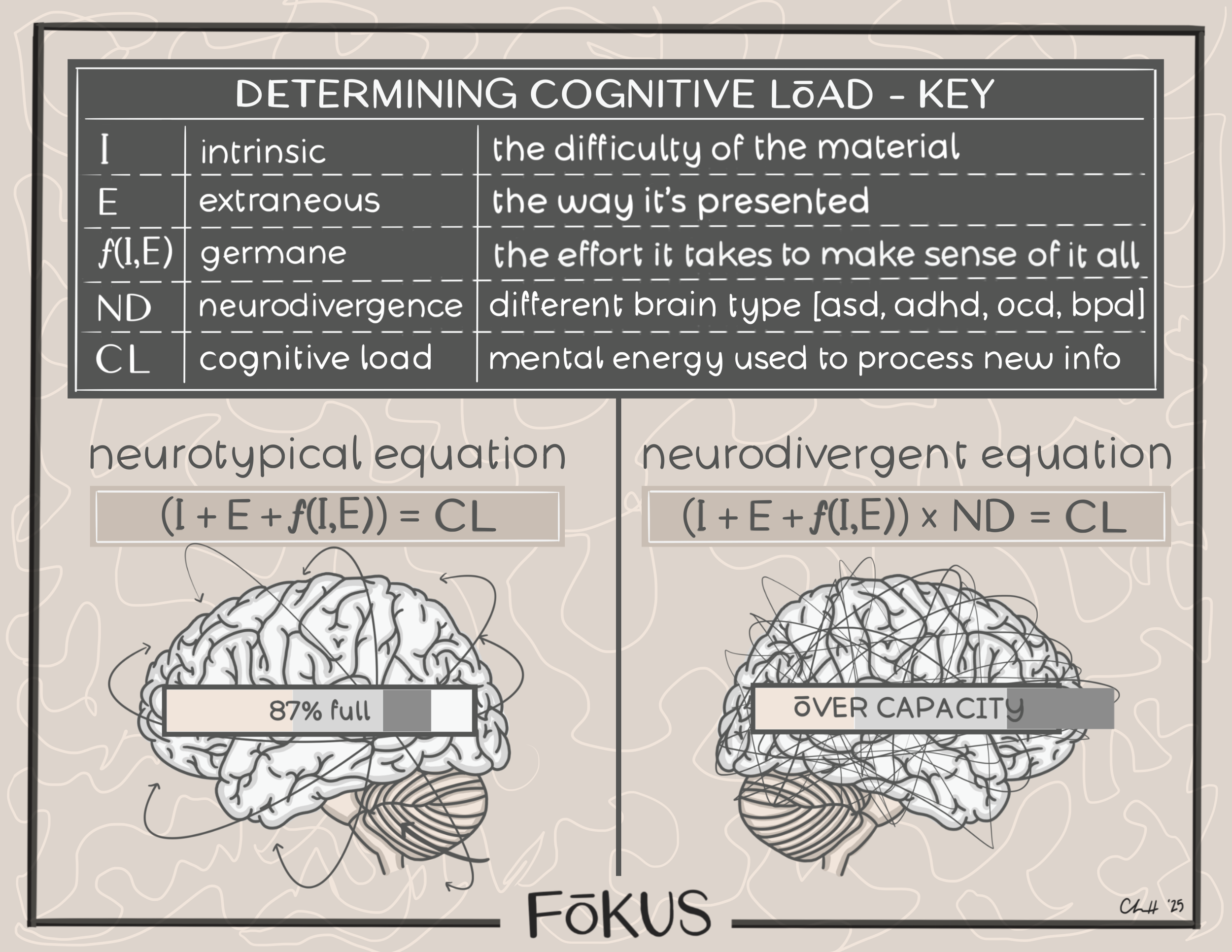
We’re no math whizzes, but this little brainy equation visual shows just how quickly learning can go from “I got this” to “I need a nap”—especially for neurodivergent minds!
Design for the brain, not against it
As instructional designers, we’re in the business of helping people learn—so understanding how the brain works should be part of the job description.
When we reduce unnecessary cognitive load, especially for neurodiverse learners, we’re not just creating accessible content—we’re creating equity in action.
When we design with cognitive load in mind, we’re not just making learning easier—we’re making it more human, more inclusive, and way more effective for everyone.